
1:13 AM Shower Drain Clogs: Hair, Soap Scum, and Biofilm Explained | |
A shower that drains slowly is usually signaling an early buildup inside the drain. Over time, common bathroom materials—especially hair, soap residues, and microbial growth—can merge into a sticky mass that traps more debris and makes clogs harder to remove.
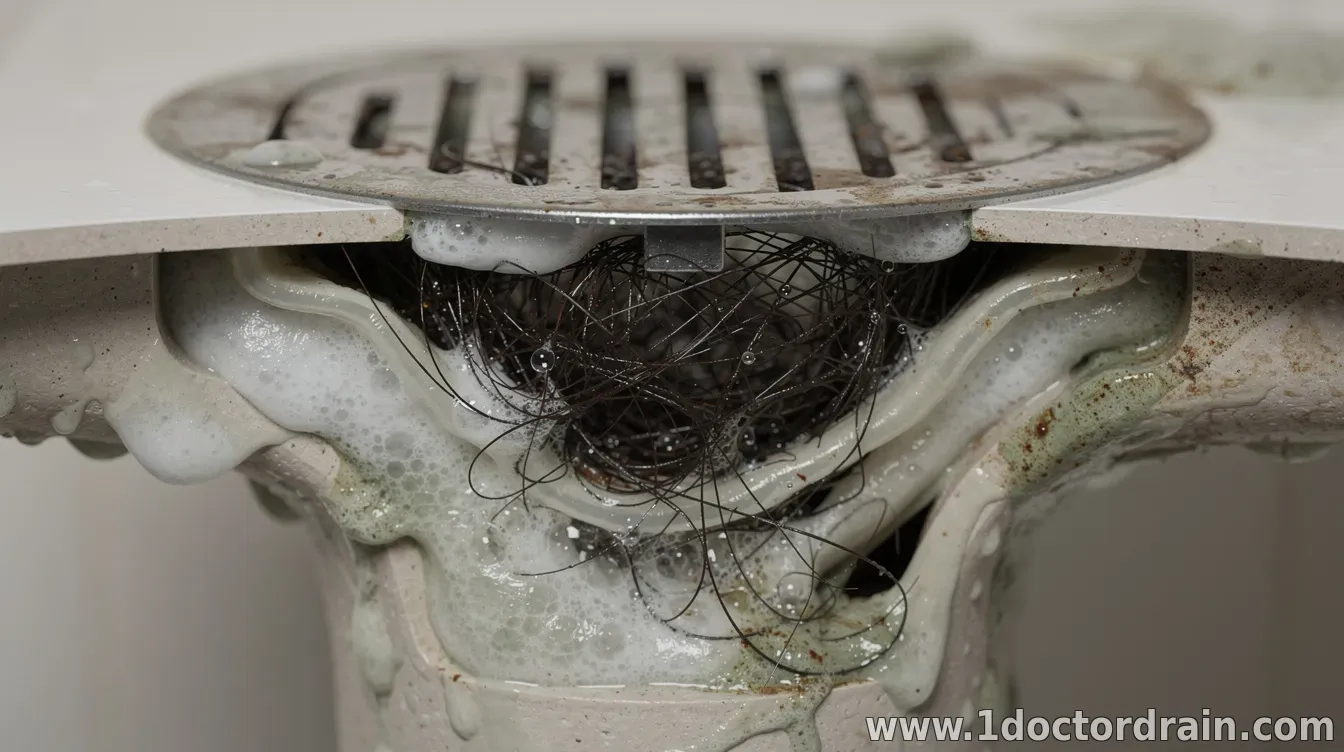
Hair is often the first ingredient. Even when it doesn’t look like much, short strands and tangles can collect at the drain opening and form a “net.” Water flow pulls more fibers into the mesh, gradually tightening the cluster until it obstructs the pipe.
Soap scum then builds around that hair net. Many soaps and shampoos contain fats and surfactants that, with minerals in hard water, create a waxy film. This film coats the inner walls of the drain and pipe, reducing the surface area available for water to move freely.
In many drains, the next layer is biofilm—a living, slimy community of microorganisms that can adhere to surfaces. Biofilms thrive in consistently damp environments and are especially likely where organic residue (like skin oils and soap byproducts) provides nutrients. Once established, they act like “glue,” helping soap scum and hair stick together more firmly. Why these clogs worsen over time
It’s the combination that makes shower drains resilient. Hair offers structure, soap scum adds adhesive mass, and biofilm increases stickiness and protects the buildup from simple rinsing. As the blockage grows, water backs up, which further pulls in debris and accelerates the cycle. Signs you’re dealing with early buildup
If you notice water pooling at the shower base, gurgling sounds, or a persistent damp odor near the drain, it often means the clog is forming—even before the drain completely stops. Regular inspection of the drain cover can also reveal early hair accumulation. Prevention and practical removal
Prevention is typically easier than full de-clogging. Use a drain hair catcher to intercept strands before they mat. For routine maintenance, periodically remove visible buildup and consider cleaning with products designed to break down soap scum and organic residue. Where appropriate, mechanical removal—such as using a drain snake or a tool that can hook and pull hair—can address the core obstruction.
If you suspect the blockage is deep or repeatedly returns, consider professional plumbing service. A buildup that has become thick with biofilm may require targeted cleaning to clear and sanitize the affected sections without damaging plumbing.
Understanding how hair, soap scum, and biofilm work together helps you choose the right response—keeping water moving and reducing the chance that a minor slowdown turns into a recurring clog.
| |
|
| |
CALL ☎ Subscribe 👆
Next & Previous posts
Related materials:
CONTACT US 📩
Submit the form, we'll contact you as soon as possible!