
2:03 AM How Soap Scum and Hard Water Minerals Clog Pipes | |
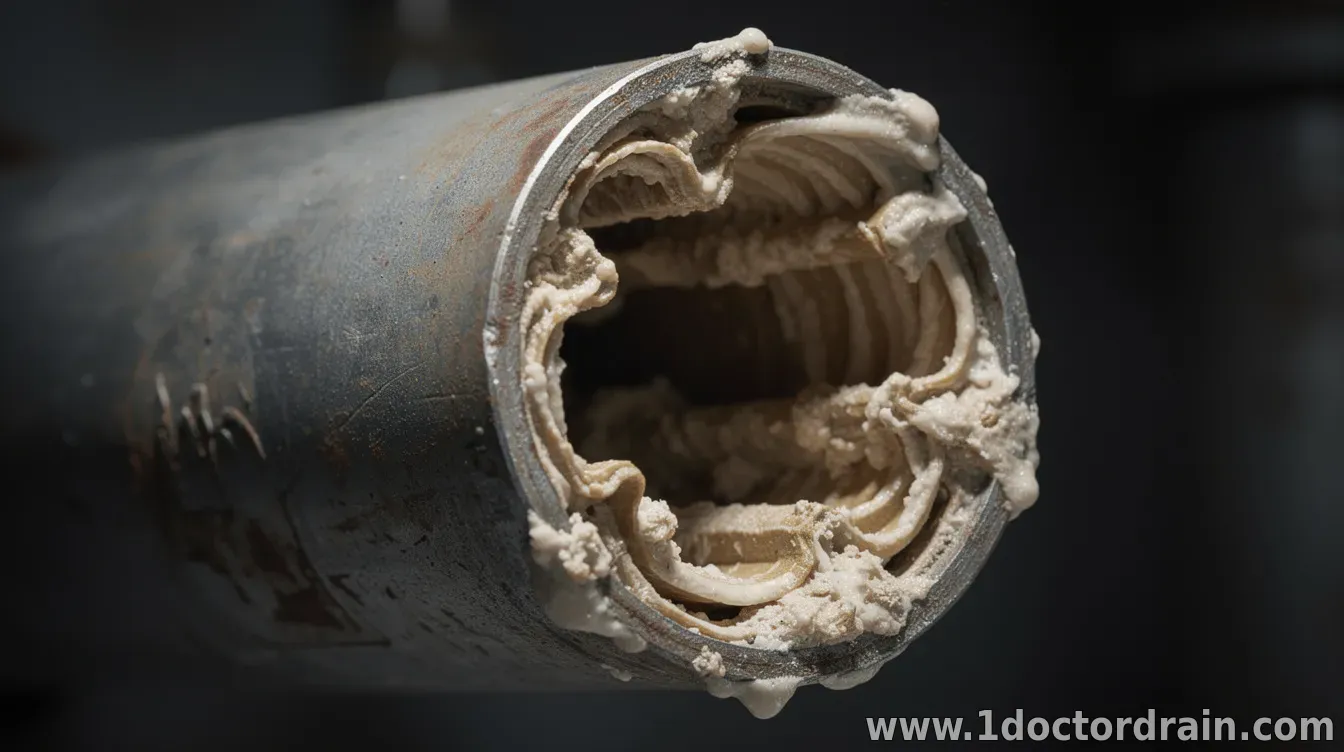
Clogged drains are rarely caused by a single culprit. More often, they’re the result of a chemical “team-up” between soap scum and hard water minerals—two common household factors that can combine into deposits strong enough to reduce flow and ultimately block plumbing.
Soap scum forms when the fats and oils in bar soap or certain detergents react with minerals like calcium and magnesium in hard water. Instead of dissolving and rinsing away, the residue clings to surfaces where water repeatedly passes—sink tails, shower walls, and the insides of drain lines.
Hard water minerals provide the structure
Hard water carries dissolved calcium and magnesium ions. As water evaporates or flows through warm plumbing, those minerals can precipitate—meaning they shift from dissolved particles to solid deposits. In drains, this process happens around existing grime, creating a mineral “scaffold” that is more difficult to remove than soap residue alone.
Soap scum adds the sticky “glue”
Soap scum is more than a film you notice on tubs and tiles. Once it builds up, it catches hair, food particles, and other everyday debris. That trapped material creates additional surface area and increases the thickness of the layer, giving hard minerals even more opportunity to adhere and grow.
Over weeks and months, the combined deposits become denser. They don’t just sit—they effectively shrink the available pipe diameter. Even partial narrowing can change how water behaves: slower drainage, gurgling sounds, and standing water can all be early signs of a developing clog.
Why the problem escalates fast in high-use areas
Clogs tend to worsen in places with frequent temperature changes, heavy soap use, and slow-draining water. Showers and bathroom sinks often experience the most buildup because of repeated soap application and frequent contact with hair and skin oils. The warm, oxygen-exposed environment can also speed up mineral deposition and make layers harder to break apart. What the buildup looks and feels like
Homeowners often describe soap scum as slippery at first, then increasingly gritty or tacky. In pipes, that “tacky” behavior matters: once minerals bind the residue, it can become a layered, rock-like deposit that is not easily flushed away by routine rinsing. How to reduce clogging risk
Preventing the cycle usually means reducing the ingredients that feed the deposits and improving maintenance habits before buildup becomes permanent.
When soap scum and hard water minerals combine, the result is a gradual narrowing that can be easy to overlook until drainage becomes slow. Treating the problem early—by targeting both soap residue and mineral scale—can help keep pipes clear, improve flow, and reduce the likelihood of tougher, more disruptive clogs later.
| |
|
| |
CALL ☎ Subscribe 👆
Next & Previous posts
Related materials:
CONTACT US 📩
Submit the form, we'll contact you as soon as possible!