2:14 AM Trenchless Pipe Repair: When It’s a Smart Option | |
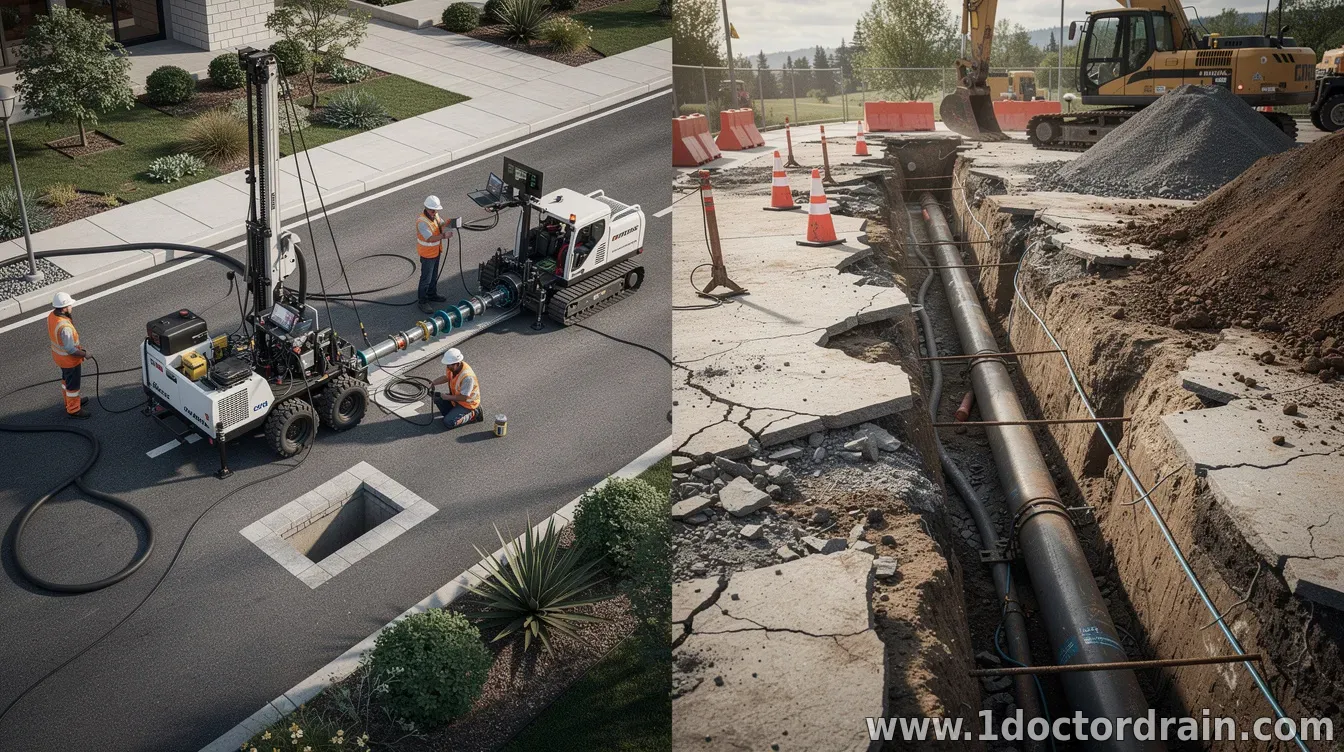
Trenchless pipe repair has become a go-to approach for utilities and property owners who want to fix leaking, damaged, or deteriorating sewer and water lines with minimal surface disruption. Instead of digging long trenches, contractors typically use methods that work through existing access points, helping preserve roads, landscaping, and daily routines.
Still, “trenchless” isn’t automatically the right answer for every pipe problem. The best option depends on the type of damage, the condition of the surrounding soil, the size and material of the pipe, and the practical realities of access at the property or right-of-way. When trenchless repair is a strong option
Trenchless methods are often most effective when the existing pipe can be rehabilitated rather than completely replaced. In many cases, liners and in-pipe coatings restore structural integrity and improve flow by creating a new internal surface.
It’s especially attractive for localized issues—such as cracks, leaks, joint separation, corrosion, or early-stage deterioration—where the pipe alignment is still mostly serviceable. Because the work is typically performed from manholes, cleanouts, or small entry pits, the approach can reduce traffic disruption, landscaping restoration, and overall job timelines.
Property owners may also prefer trenchless repair where digging would be costly or risky, such as beneath paved driveways, in tight rights-of-way, or near utilities that would be disturbed by trench excavation. For aging infrastructure, trenchless rehabilitation can be a practical way to extend service life without the scale of traditional replacement. When trenchless may not be enough
Some conditions point to open excavation or full replacement. If the pipe is severely collapsed, fully blocked, or crushed beyond what a liner can reliably restore, trenchless rehabilitation may fail to achieve the needed structural performance. Similarly, extensive deformation that prevents proper rehabilitation can limit liner installation or make results unpredictable.
Severe root intrusion, heavy debris accumulation, or complex blockages may require more aggressive cleaning or excavation to address the problem at its source. While some trenchless systems include pre-cleaning steps and joint sealing, there are cases where removing the underlying cause is not feasible without digging.
Access and site constraints also matter. Trenchless work needs usable access points for equipment and for the specific method being used. If there are no suitable entry locations, if the pathway for installing liners is obstructed, or if the pipe configuration is unusually difficult to reach, the “minimal digging” advantage can shrink considerably. How to decide: the signals professionals look for
Reliable recommendations usually start with inspection—commonly using closed-circuit camera footage and measurements—followed by an assessment of pipe material, diameter, joints, and the extent of damage. Contractors will evaluate whether the pipe can be re-lined or whether replacement is required to meet performance expectations.
Key factors include the severity and location of the defects, whether the line is misaligned, how much the internal diameter is affected by buildup, and the condition of surrounding soil. In many projects, a careful comparison of total disruption, schedule, and long-term performance helps determine whether trenchless rehabilitation or excavation provides the most durable outcome.
For many municipalities and homeowners, trenchless pipe repair is an effective way to address common degradation and leaks with less disruption than digging. But when the damage is too severe, access is limited, or the underlying issue can’t be properly corrected through rehabilitation alone, traditional replacement may be the safer, more dependable path.
| |
|
| |
CALL ☎ Subscribe 👆
Next & Previous posts
Related materials:
CONTACT US 📩
Submit the form, we'll contact you as soon as possible!