0:47 AM Trenchless vs Open-Trench Sewer Repair: Cost Comparison | |
|
Choosing between trenchless sewer repair and open excavation usually comes down to one question: what will it cost in your exact situation? Pricing can vary widely based on sewer line length, pipe diameter, the type of damage, ground conditions, and how much restoration (driveways, landscaping, pavement) is required.
This cost comparison breaks down the typical cost drivers for both approaches so homeowners and property managers can estimate total project budgets more accurately. Typical cost ranges: what you might pay
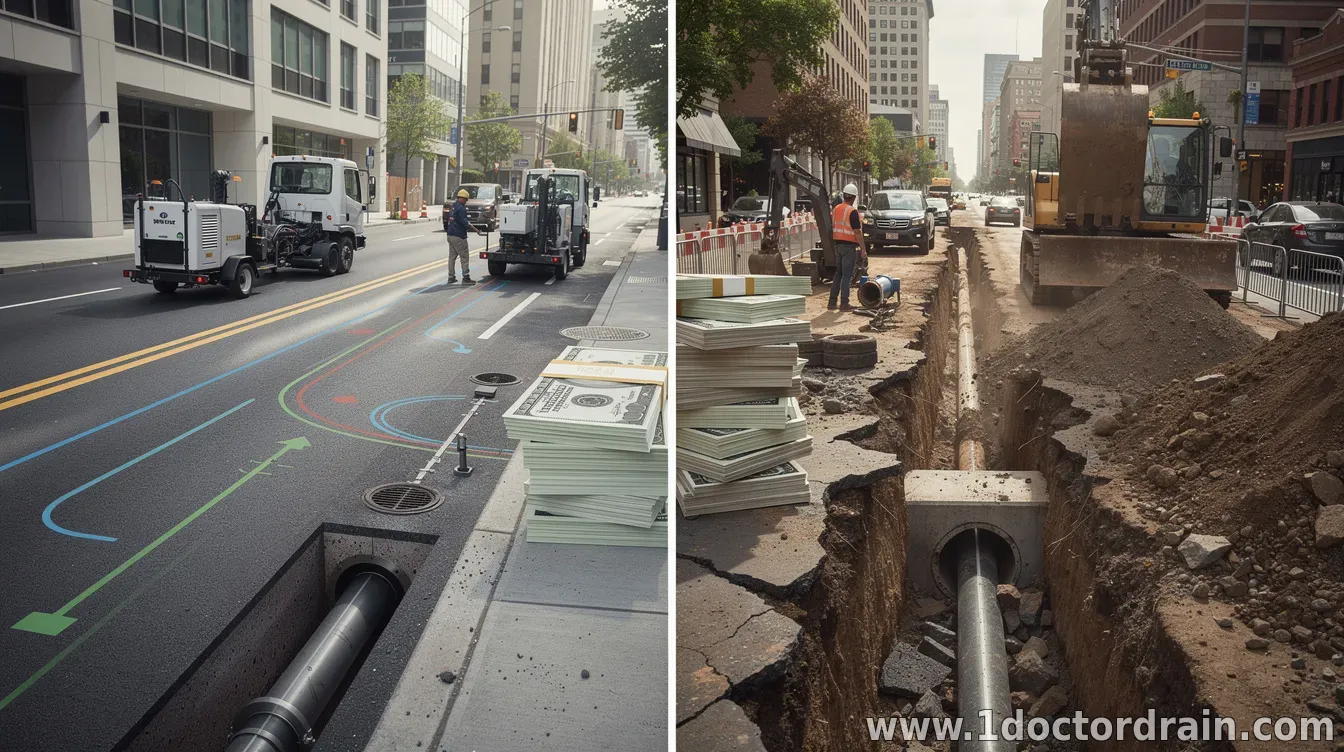
In many markets, trenchless methods (such as pipe lining or pipe bursting) often carry a higher price per foot than open excavation. However, open excavation can become more costly when you add labor, traffic control, disposal, and resurfacing. As a result, the lowest bid is not always the lowest final cost.
Rule of thumb: Trenchless repair can be more cost-effective for localized damage in accessible areas because restoration is minimized. Open excavation may be more economical for severe failures that require full replacement or when trenchless techniques aren’t feasible. Cost components for trenchless sewer repair
Trenchless projects typically include fewer surface disruptions, which can reduce “hidden” expenses. Common cost components include:
Pipe condition assessment: Camera inspections and mapping to confirm the problem location and severity.
Even so, trenchless is not always “cheaper”—its equipment and materials can raise the baseline cost, especially for longer segments or complex alignments. Cost components for open excavation
Open excavation can be straightforward conceptually, but costs can climb when construction work extends beyond the pipe trench. Typical expenses include:
Traffic and safety measures: Barriers, permits, and traffic control in public or shared-access areas.
For properties with high restoration costs—such as paved streets, stamped concrete, mature landscaping, or tight access—open excavation can be materially more expensive than it first appears. When trenchless is likely the better value
Trenchless methods often provide stronger overall value when:
Damage is localized and the pipe can be repaired within a targeted segment.
Because fewer surface repairs are required, trenchless projects can avoid large “after” costs that appear during restoration. When open excavation may be the better option
Open excavation may win on cost and performance when:
The pipe failure is severe or beyond repair (for example, extensive collapse, major misalignment, or widespread root intrusion in many segments).
In these cases, excavation can reduce risk and avoid the possibility of needing a second mobilization later. Hidden costs that often decide the final price
Regardless of method, the biggest cost swings typically come from factors that aren’t obvious in early quotes:
Restoration scope: The price difference between “a small repair zone” and “rebuild the entire driveway segment” can be substantial. How to get an apples-to-apples estimate
To compare trenchless vs open excavation fairly, request quotes that include the same scope details:
This prevents “lowest bid” surprises where one proposal excludes resurfacing, traffic control, or specialized prep work.
Bottom line: Trenchless sewer repair often becomes the best value when minimizing restoration and disruption matters most and the damage is suitable for lining or bursting. Open excavation can be cost-effective when the system needs major replacement or trenchless feasibility is limited—though restoration and site-management costs can push total expenses higher.
If you share the approximate pipe length, diameter, whether the line is public or private, and what symptoms you’re seeing (backup, leaks, roots, collapse), the comparison can be narrowed to a more realistic budget range for your specific project.
| |
|
| |
CALL ☎ Subscribe 👆
Next & Previous posts
Related materials:

CONTACT US 📩
Submit the form, we'll contact you as soon as possible!