
0:20 AM Floor Drains vs Storm Drains: Key Differences | |
People often use the terms floor drain and storm drain interchangeably, but they’re not the same thing. While both help manage water, each is designed for a specific type of flow and connects to a different part of a building or municipality’s drainage network.
Understanding the distinction matters for safety, property protection, and compliance—especially when water is contaminated, when upgrades are planned, or when flooding is a recurring issue. What a floor drain is for
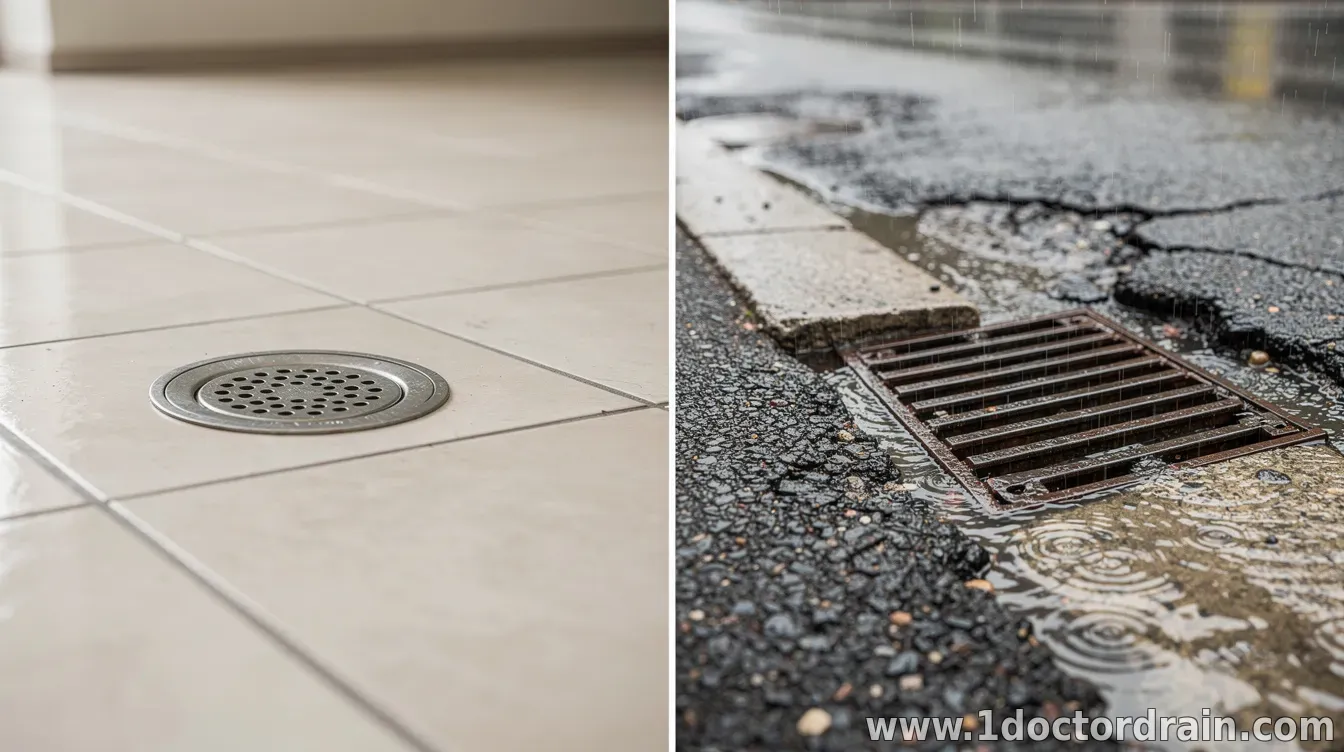
A floor drain is typically installed inside a building—such as in basements, garages, utility rooms, or industrial spaces—to capture water from floors. It’s commonly used for sources like accidental spills, leaks, or routine wash-down water.
Depending on the building’s drainage design, a floor drain may discharge to a sanitary sewer or a storm system. In many homes and commercial buildings, floor drains near living areas or equipped with plumbing fixtures are treated as part of the water-handling infrastructure inside the property, not the street network. What a storm drain is for
A storm drain is part of a city or county drainage system designed to handle rainfall and runoff. These are commonly located along streets, in parking lots, or in stormwater basins. Their job is to move surface water away from roadways and prevent flooding during storms.
Unlike sanitary sewer lines, storm drains are generally intended to receive stormwater (water from precipitation and related runoff), not domestic wastewater. Because stormwater systems discharge to natural waterways in many jurisdictions, contamination risks are a major concern. How they connect—and why it changes the rules
The biggest difference is where each drains to. A floor drain might be connected to plumbing that ultimately ends up treated as wastewater, while a storm drain typically routes water through stormwater infrastructure.
This distinction affects what you can safely discharge. For example, dumping oils, detergents, chemicals, or other pollutants into a drain connected to a storm system can violate local regulations and can lead to fines and environmental harm. Why homeowners and facilities should care
Confusing floor drains and storm drains can lead to real-world problems: backups inside a building, ineffective drainage during heavy rain, or improper disposal practices that increase maintenance and compliance risk.
For building owners and facility managers, the correct classification also influences inspection priorities. Floor drains may require periodic cleaning to prevent clogs, while storm drainage areas often require upkeep to ensure inlets and outlets remain clear during storm season. Common scenarios where the difference matters
Several everyday situations reveal why knowing the difference is important. If you’re planning renovations, adding equipment that drains to the floor, or addressing recurring dampness, the discharge path matters. The same is true if you’re working near curb inlets or managing runoff from paved areas.
If you’re uncertain how a specific drain is connected, check plumbing records, look for labeling, or consult a qualified plumber or drainage professional. Municipal utilities can also provide guidance about stormwater system rules in your area.
In short, both floor drains and storm drains help manage water—but they are designed for different flows and governed by different expectations. Getting the details right can prevent costly issues and protect both your property and the broader environment.
| |
|
| |
CALL ☎ Subscribe 👆
Next & Previous posts
Related materials:
CONTACT US 📩
Submit the form, we'll contact you as soon as possible!