6:38 AM How Freezing Temperatures Affect Outdoor and Floor Drains | |
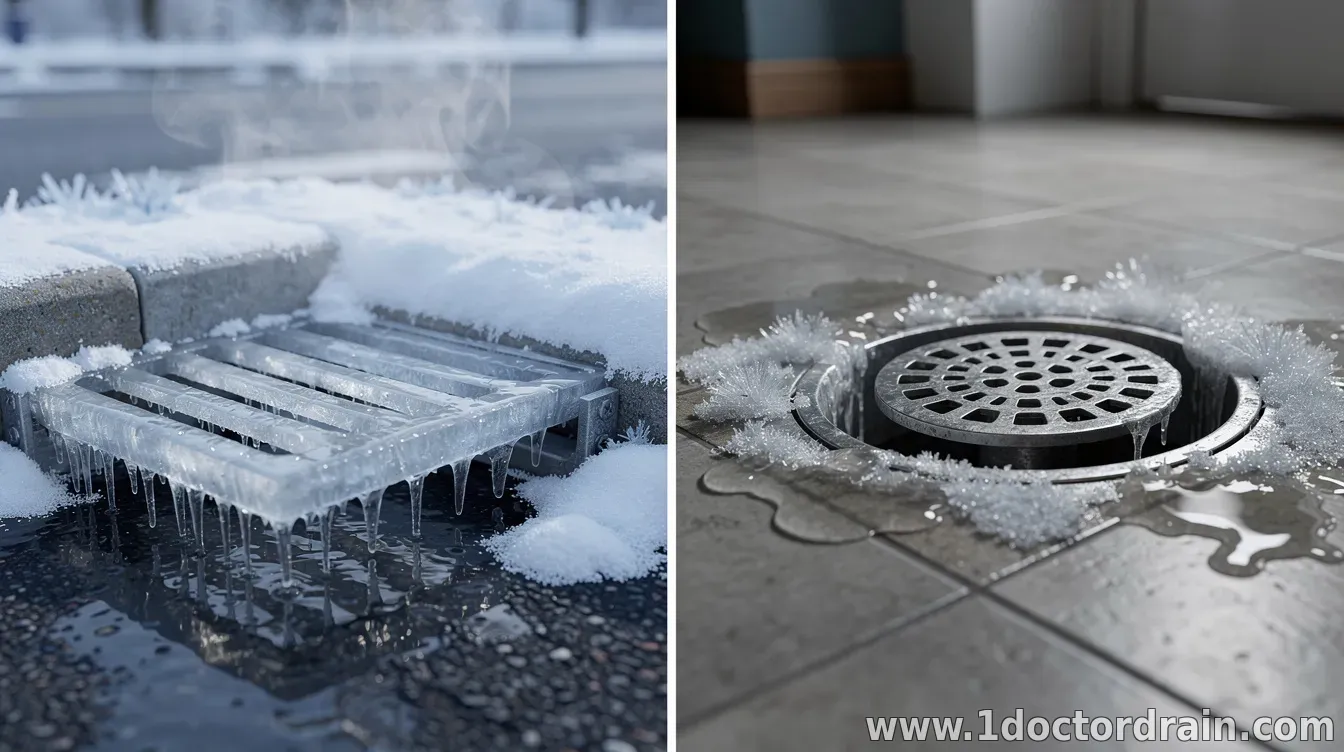
When temperatures drop, water doesn’t always disappear—it can shift into solid form. Outdoor drains and interior floor drains that normally carry rainwater, meltwater, or household runoff can become vulnerable as freezing conditions cause water in drain lines to expand and block passages.
In many cases, the problem starts with a simple physics issue: water freezes at 32°F (0°C). Once ice begins forming in the drain opening, the ice can grow within the pipe, narrowing the channel and slowing or stopping drainage altogether. Why outdoor drains are especially at risk
Outdoor drains—such as those around foundations, driveways, patios, and low points on a property—often face exposure to the elements. If the drain line runs close to the surface or passes through uninsulated areas, the water inside the pipe can freeze more easily. During heavy rain or melting snow, the volume of water can exceed what the system can move quickly, leaving more liquid trapped in vulnerable sections.
Additionally, debris can accelerate freeze-related failures. Leaves, sediment, and small debris can collect in grates and near pipe inlets. When that buildup traps water, it provides an ideal “freeze point,” encouraging ice to form earlier and block flow sooner. How floor drains can back up indoors
Floor drains in basements, garages, and utility rooms typically handle condensation, occasional spills, or wash-down water. In freezing weather, the risk is often linked to the water seal and the drain line leading to the main plumbing. If the water that normally maintains flow through the trap freezes or drains away, the seal can be disrupted, creating conditions that may lead to slow drainage, odors, or in severe cases, backup.
Frozen sections can also produce “partially blocked” behavior: water may drain slowly at first, then stop completely. When thawing occurs, that trapped water can rapidly move—carrying any loosened debris—leading to sudden backups if the line remains compromised. Signs that a drain is failing in cold weather
Property owners can often spot early warning signs before a full blockage occurs. These include slow draining from sinks or showers, pooled water near a drain grate, gurgling sounds from plumbing fixtures, and recurring moisture in areas where it typically dries. In outdoor areas, ice buildup around grates during cold snaps can indicate water is freezing at the inlet or in a nearby section of the line.
In some situations, small “freeze-thaw” cycles can widen the problem. Water that repeatedly freezes and thaws can stress pipe joints and fittings, increasing the chance of leaks over time. Preventive steps before the coldest days
Preventing freeze-related drain issues usually comes down to reducing trapped water, protecting vulnerable pipe sections, and keeping inlets clear. Simple actions before a freeze can make the difference between minor inconvenience and costly water damage.
For buildings with recurring problems, professional assessment may be warranted—especially if drain lines pass through unheated spaces, crawlspaces, or areas with poor insulation. What to do if freezing causes a blockage
If a drain appears blocked during freezing weather, forcing water through with harsh methods can sometimes worsen damage. Safer approaches typically focus on restoring flow gradually and addressing the underlying cause (like debris or insufficient protection). Thawing should be done carefully to avoid cracking components and to prevent sudden releases of trapped water.
If you suspect pipe damage, persistent backups, or evidence of leaks, contacting a qualified plumbing professional can help prevent escalation—particularly when repairs involve freeze-related pipe stress or joint failure.
Freezing temperatures can turn normal drainage systems into bottlenecks by immobilizing water, increasing pressure through expansion, and amplifying the effects of debris. By understanding where ice forms and taking targeted preventive steps, property owners can reduce the likelihood of backups, leaks, and indoor water damage during winter conditions.
| |
|
| |
CALL ☎ Subscribe 👆
Next & Previous posts
Related materials:
CONTACT US 📩
Submit the form, we'll contact you as soon as possible!