1:31 AM Cast Iron vs PVC Sewer Pipes: What Homeowners Should Know | |
Replacing a damaged or aging sewer line is rarely a quick fix. When homeowners face planning decisions—what material to use and how the replacement will be installed—comparing cast iron and PVC sewer pipes can clarify tradeoffs in cost, longevity, noise, and repair strategy.
In most residential cases, PVC is common for new sections and many repairs, while cast iron still appears in older homes and older municipal or neighborhood systems. The “right” choice typically depends on what you are replacing, where it runs, and how the line will be connected to the rest of the existing plumbing. Durability and expected lifespan
Cast iron is known for long service life and strong resistance to many forms of mechanical wear. It has historically been used for decades in drain and sewer applications, and many installed runs still function well even after years of use.
PVC is also designed for sewer service and can perform effectively when installed correctly. However, its long-term outcome depends heavily on installation practices—especially proper bedding, slope, and avoiding impacts or excessive stress at joints. Cracking, corrosion, and performance over time
Cast iron is resistant to impact better than many plastics, but it can be affected by corrosion over time. In particular, the internal pipe lining and the condition of the system where water chemistry and flow patterns vary can influence how quickly deterioration occurs.
PVC does not corrode the way metal can, but it can be vulnerable if exposed to improper handling, improper support, or conditions that cause movement at the joints. In sewer service, both materials can fail when systems are stressed—by poor slopes, tree-root intrusion, or recurring backups—so the underlying cause of the problem matters as much as the material itself. Noise and odor considerations
Cast iron is often praised for reducing vibration and noise in drain lines. Homeowners may notice less “ringing” or rattling during wastewater flow, particularly in older homes where cast iron may already be present.
PVC can be quieter or louder depending on installation, pipe support spacing, and how the pipe is routed. While PVC is widely accepted for sewer use, noise complaints are most likely when mounting and backfill practices are not optimized. Repair approach: replace sections or the whole line
One of the most important questions is not only which pipe material to select, but how much to replace. If the damage is localized—such as a specific cracked section—contractors may recommend replacing that segment and ensuring robust connections to adjacent pipe materials.
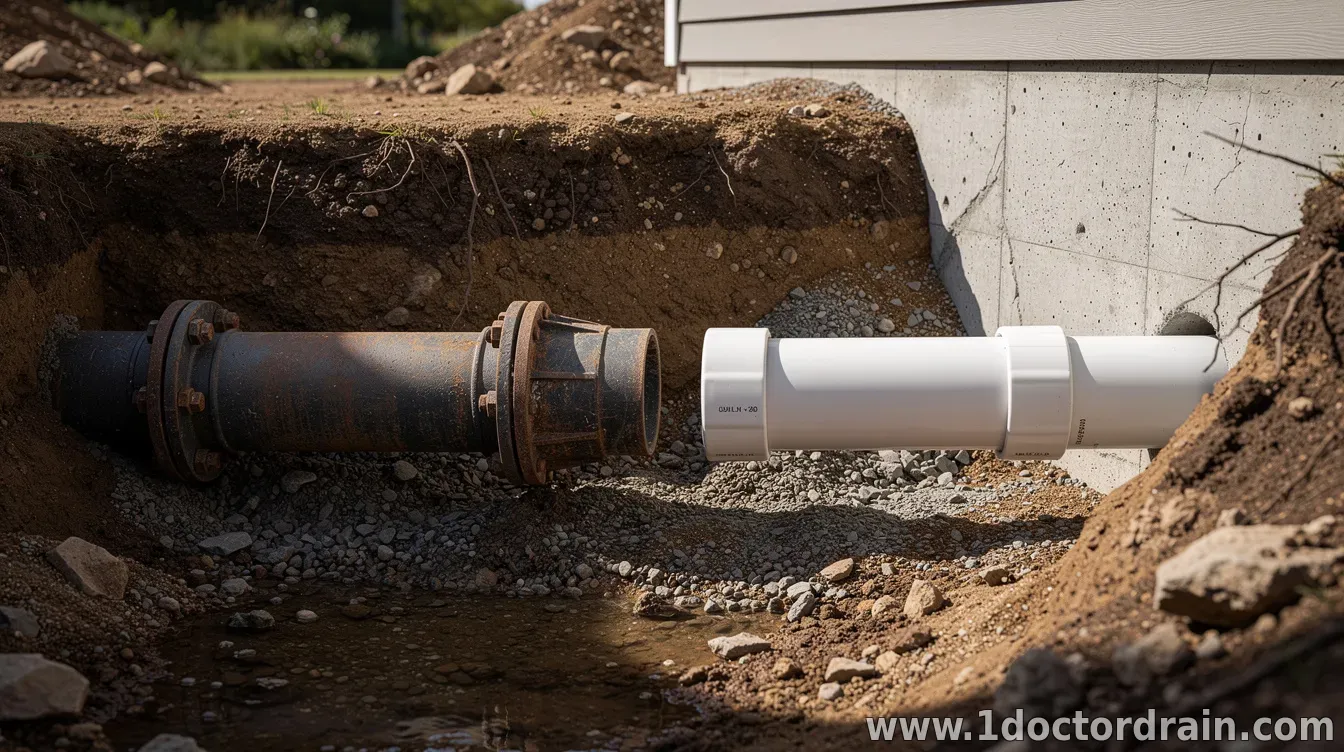
If the pipe is broadly deteriorated, repeated repairs may become costly. In those scenarios, a full or larger replacement can provide better long-term value. Either way, homeowners should ask how the contractor will handle transitions between cast iron and PVC (and whether the plan aligns with local code and manufacturer guidance). Cost, permits, and installation factors
Pricing can vary widely by location, excavation needs, and the complexity of reconnecting to existing plumbing. In many markets, PVC materials may cost less than cast iron, and installation can be faster—though labor and site constraints often dominate the final price.
Before committing, homeowners should confirm permit requirements, inspection timelines, and whether the contractor includes responsibilities such as debris removal, restoration of landscaping, and post-install checks. Ask specifically about trench depth, bedding, compaction, and pressure-testing or inspection procedures where applicable.
Ultimately, the decision between cast iron and PVC is rarely “pick one material for everyone.” It’s about matching the material to your situation—existing pipe condition, soil and loading conditions, the likely source of failure, and the required connection method. Getting a clear inspection (often including camera evaluation for sewer lines) before selecting a replacement material can help prevent expensive rework and improve the odds of a durable fix.
What to ask your contractor before replacement:
With the right assessment and installation plan, either cast iron or PVC can be a solid choice. The key is ensuring the replacement addresses the root cause and meets the technical requirements for your specific sewer line route.
| |
|
| |
CALL ☎ Subscribe 👆
Next & Previous posts
Related materials:

CONTACT US 📩
Submit the form, we'll contact you as soon as possible!