0:17 AM Clay Pipe vs Cast Iron: Which Fails First in Chicago Suburbs? | |
|
Residents in the Chicago suburbs often hear competing claims about which older pipe material fails first: clay (typically vitrified clay) or cast iron. The short answer is that neither “always” fails first. But the two materials tend to fail in different ways, and Chicago-area conditions make those failure modes show up at different times.
The main driver is how the pipe behaves under stress. Freeze-thaw can widen defects, soil movement can misalign joints, and groundwater chemistry can accelerate corrosion. When these pressures combine, clay and cast iron usually “give” for different reasons—meaning the earliest failure depends on which weak point is present first. Clay pipe: the early warning is cracking and joint infiltration
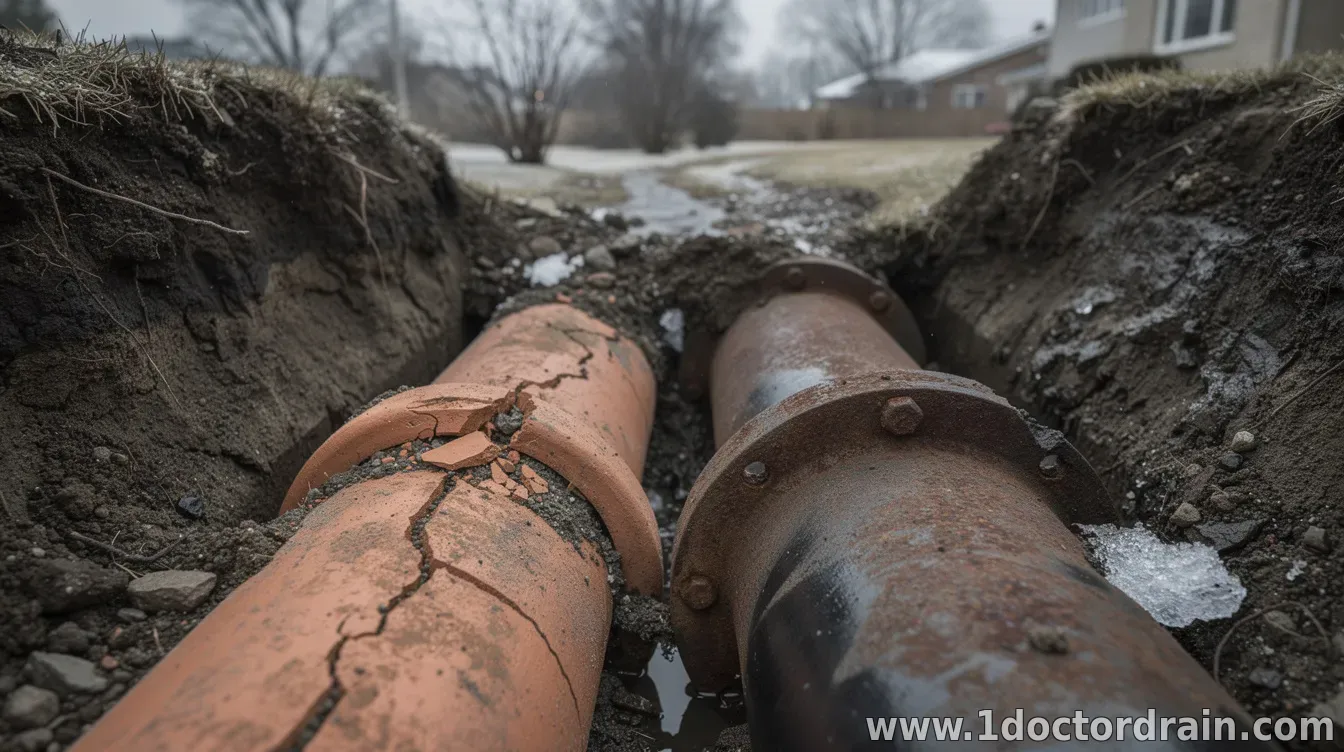
Clay pipe is rigid and can be durable when installed perfectly, but it is also less forgiving when the ground shifts or when joints are imperfect. In many aging systems, the first failures show up as small cracks, misaligned sections, or degraded joint seal material. Once that happens, water can infiltrate through joints and along cracks—damaging nearby backfill and increasing wear on the surrounding system.
In freeze-thaw climates, moisture in or around damaged joints can expand and contract repeatedly. Over time, that cycling can convert minor cracking into functional failure, making clay problems more likely to appear earlier when installation flaws, settlement, or root intrusion have already occurred. Cast iron: common failure is corrosion that accelerates later
Cast iron is also rigid, but it tends to fail through a different pathway: internal corrosion and loss of wall thickness. Even when cast iron is initially sound, scale buildup (including tuberculation) can roughen the interior and narrow flow capacity. That restriction can increase the likelihood of surcharging and backups, particularly during heavy rain events.
Corrosion severity depends on soil and water chemistry. In areas where groundwater or surrounding soils are more corrosive, cast iron can deteriorate faster. Still, compared with clay’s tendency to show early cracking when stressed at joints, cast iron often presents a more gradual decline—so the “first failure” may occur later unless conditions are highly corrosive or an existing breach is already present. In Chicago suburbs, installation and repairs often matter more than material
Both clay and cast iron systems in the region include a mix of original construction quality and later repairs. A poorly compacted trench, inaccurate grade, or joint treatment that didn’t perform as intended can create failure regardless of the nominal pipe material. Similarly, older patched sections—whether clay-to-cast-iron connections, replaced segments, or lead/wrap material choices—can become the weak link.
That’s why two neighboring homes with the same pipe type can experience failures at different times: one line may have stable bedding and intact joints, while the other may have settlement, root intrusion, or water chemistry that accelerates deterioration. What usually shows up first during inspections
When crews inspect with CCTV, the earliest indicators differ. For clay lines, inspectors more often find cracking, offset joints, and signs of infiltration around connection points. For cast iron, inspectors may see internal corrosion, tuberculation, and reduced flow capacity, with breakdown sometimes concentrated in low points where water sits longer.
Both types can also fail due to the same external triggers—like tree roots, construction vibration, or differential settlement—meaning the “winner” in a specific case is determined by which trigger is active first.
Bottom line: In typical Chicago-suburb conditions, damaged clay—especially at joints—often becomes a sooner, earlier failure mode because small defects can expand under freeze-thaw and infiltration. Cast iron frequently degrades through corrosion and capacity loss, which can be more gradual—though in highly corrosive soils or with pre-existing breaches, cast iron can fail earlier too.
If you’re evaluating a property, the most useful next step is usually not the material label on paper, but a condition assessment: camera inspection, leak/infiltration evaluation, and a review of nearby soil and groundwater conditions. Those findings will indicate which mechanism is already underway and which risk is most likely to emerge first.
| |
|
| |
CALL ☎ Subscribe 👆
Next & Previous posts
Related materials:
CONTACT US 📩
Submit the form, we'll contact you as soon as possible!