2:22 AM How Often Commercial Properties Should Schedule Main Line Rodding | |
|
Main line rodding is a common preventive and corrective method used to clear obstructions in sewer and drain lines. For commercial properties, the “right” frequency isn’t one-size-fits-all—service intervals typically reflect how heavily the plumbing is used, what enters the system, and whether there are signs of recurring flow issues.
Below are the main drivers that determine how often a property should schedule main line rodding, along with practical benchmarks many facilities use to build a maintenance plan. Start with usage and load
The frequency should rise as the property’s drainage load increases. Facilities with frequent showers, restrooms, kitchens, laundry operations, or high foot traffic tend to accumulate debris and grease faster. As a baseline, light-use sites may need less frequent attention, while higher-use sites often benefit from more proactive scheduling.
Examples include restaurants, hotels, gyms, schools, and multi-tenant retail centers—each can have different patterns of peak demand that affect how quickly lines foul. Use historical issues as your best indicator
If your property has a history of slow drains, recurring clogs, backups, or emergency cleanouts, that’s a strong signal you should schedule rodding more regularly. A common approach is to treat the period after a cleaning event as a “reset,” then re-check frequency based on how long problems take to return.
Where issues recur quickly, operators often shift from reactive maintenance (clearing after a blockage) to a preventive cadence (clearing before buildup becomes severe). Consider what goes into the plumbing
What flows through the main line matters just as much as how often. Grease and food particles, hair, sanitary wipes and non-degradable materials, construction debris, and tree-root intrusion (in exterior runs) all increase the likelihood of obstructions.
Properties with kitchen operations typically need closer monitoring and may require more frequent main line attention than offices or medical clinics, depending on waste-handling practices. Adopt a risk-based interval (common benchmarks)
While exact timing depends on inspection findings, many commercial facilities fall into one of these practical planning ranges:
After an initial assessment, the interval should be adjusted based on real-world outcomes—how quickly symptoms return and whether further cleaning is needed. Align rodding with inspections and upgrades
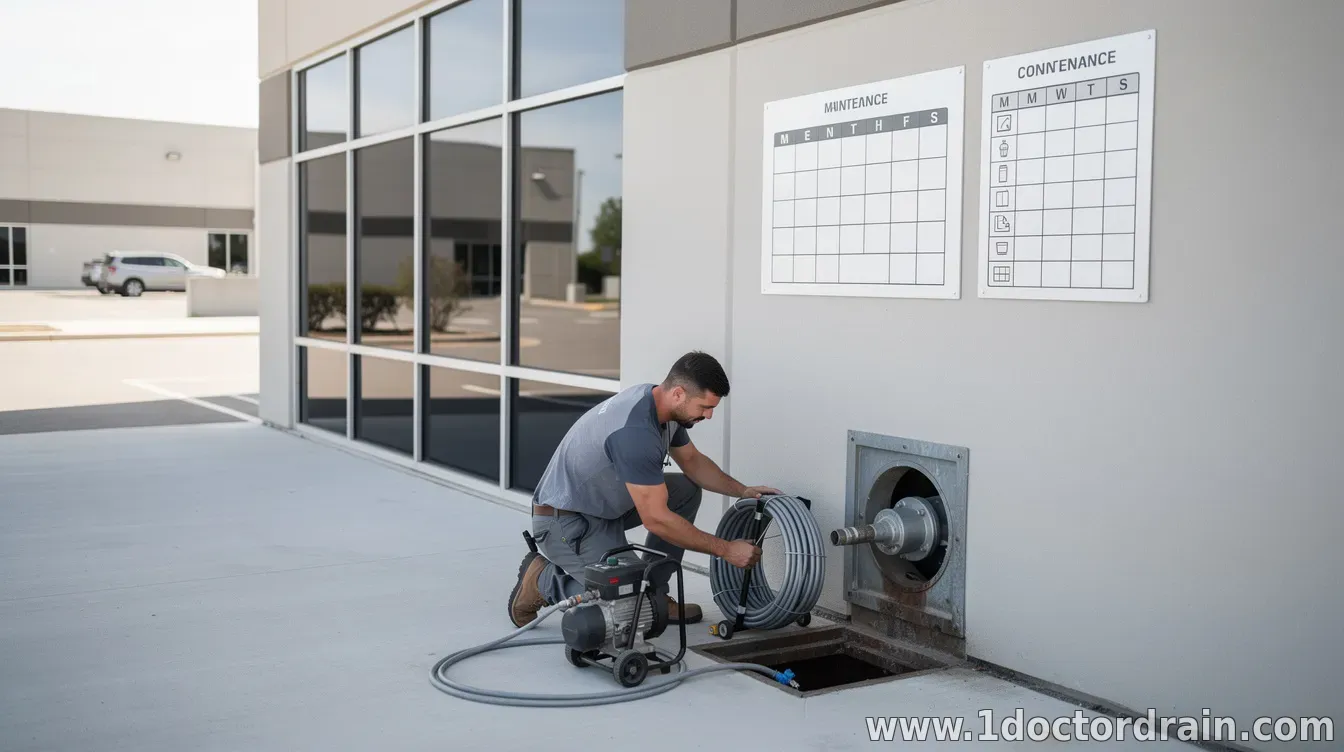
Best practice is to pair rodding schedules with broader maintenance activities such as camera inspections, fixture drain checks, grease interceptor maintenance (where applicable), and staff education. If a camera inspection shows wear, cracks, misalignment, or recurring root intrusion, your plan may need to include repairs—not just periodic cleaning.
In other words, rodding frequency should be part of a strategy, not the only solution. Watch for trigger events that call for earlier service
Even if your property follows a planned cadence, rodding may be needed sooner when specific warning signs appear. Trigger points commonly include:
When these occur, delaying cleaning can allow buildup to harden and increase the chance of more disruptive stoppages. A practical takeaway for commercial managers
Most commercial properties benefit from a preventive approach that starts with an assessment and then uses a risk-based interval—often around 6 to 12 months for higher-use sites, and closer to 12 to 24 months for lower-use, stable systems. The “best” schedule is the one that keeps symptoms from recurring and reduces emergency downtime, while matching your property’s actual risk profile.
If you share your property type and any past drainage or backup issues, you can narrow down a more tailored maintenance frequency.
| |
|
| |
CALL ☎ Subscribe 👆
Next & Previous posts
Related materials:
CONTACT US 📩
Submit the form, we'll contact you as soon as possible!