1:13 AM Understanding Your Home’s Drain System: A Homeowner’s Map | |
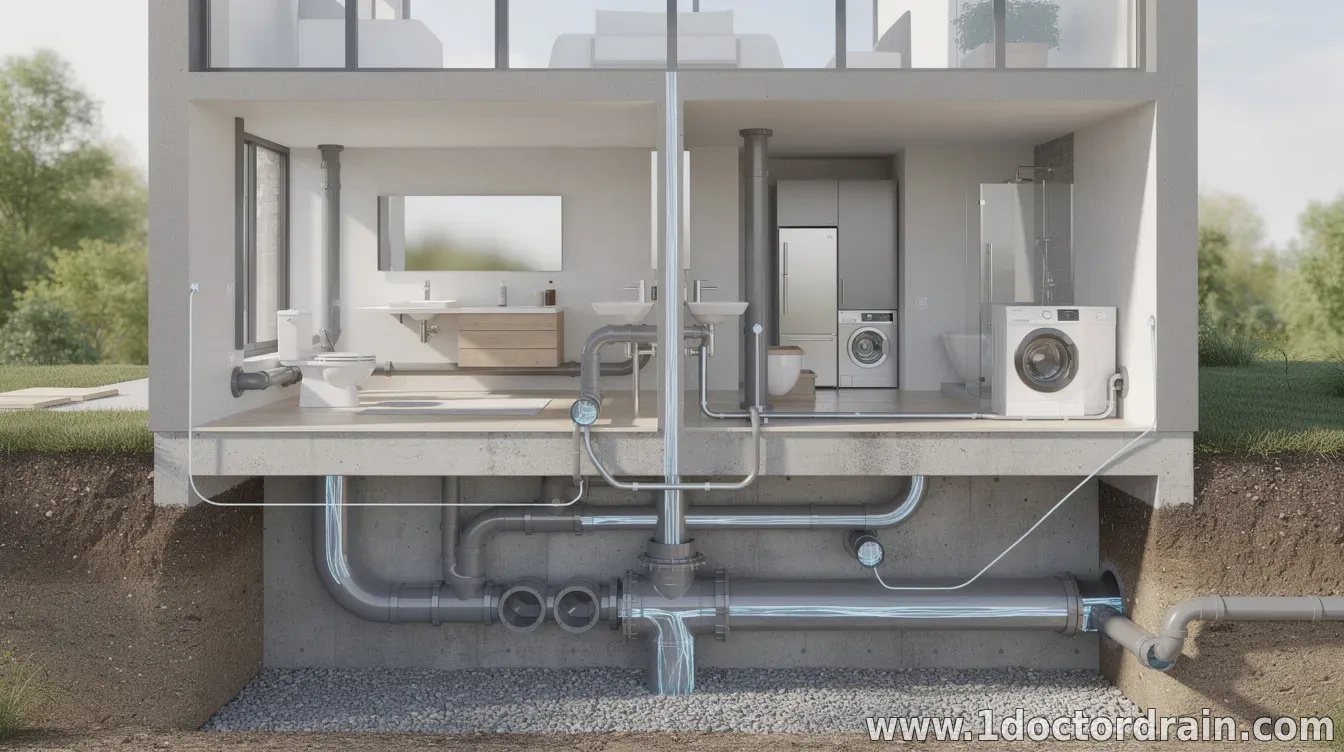
Your home’s drain system isn’t one pipe—it’s a connected network designed to move used water safely from sinks, toilets, and showers to the main sewer line or septic tank. When you know how it works, you can spot early warning signs and make better decisions about repairs.
Below is a practical homeowner’s “map” of the system, from the fixtures you use every day to the point where waste leaves your property. Think of it as a guided tour that also explains what can go wrong and why. 1) The starting points: fixture drains
Everything begins at the drains in your home. Kitchen sinks typically connect to traps under the counter, while bathroom sinks, tubs, and showers each have their own drain line that carries wastewater away. Toilets connect to a dedicated drain that uses a flapper and siphon action to move waste through the plumbing.
These fixture connections are usually protected by P-traps or similar trap assemblies. Traps hold a small amount of water to prevent sewer gases from coming back into your rooms. 2) Branch lines and venting: why “air” matters
Once wastewater leaves the fixture drains, it flows into larger branch lines, which then feed into the main drain system. Just as important is the venting system—pipes that allow air to enter the plumbing so water can drain smoothly.
Vents help prevent issues like slow drainage and gurgling by balancing pressure. A common symptom of venting problems is when drains sound like they are “glugging” or when water backs up after using another fixture. 3) The main drain line: gathering and carrying wastewater
As branch lines combine, they typically feed into a main drain line that runs toward the home’s exterior foundation. In many homes, this main line connects to the sewer service line (for municipal sewer) or to plumbing leading to a septic tank (for septic systems).
Where these lines run can vary by home design, but the principle is consistent: multiple sources converge into fewer pipes, which increases the impact of clogs. If the main line is obstructed, several fixtures may drain poorly at the same time. 4) Cleanouts: your best “access point”
Most homes include cleanouts—small capped openings that provide access for inspection and clearing blockages. Cleanouts are often located near the foundation or at points where the pipe layout changes.
If you’ve ever wondered why there’s a removable cap on an exterior wall or near a basement wall, this is the reason: it makes maintenance safer and faster than removing fixtures.
Where to look: You may find cleanout caps in basements, crawl spaces, garages, or outside near the foundation. If you’re unsure, check your home’s plumbing diagrams, records, or ask a licensed plumber to show you the layout. 5) The exit: municipal sewer vs. septic systems
At the far end of your system, wastewater leaves either through a connection to a municipal sewer or through piping to a septic system.
For municipal sewer homes, the main line runs to the public sewer connection. For septic homes, plumbing typically leads to a septic tank where solids settle and liquids flow onward to a drain field or leach field for further treatment.
These two setups behave differently, so it’s important to know which one you have before troubleshooting or attempting DIY “fixes.” 6) Common issues and early warning signs
Understanding the system helps you connect symptoms to likely causes. For example, a clogged trap or small blockage often affects one fixture, while a venting or main-line issue can affect multiple drains.
If problems are recurring or involve frequent backups, it’s a strong signal that a professional inspection may be the most cost-effective path.
Maintenance note: Simple habits—like avoiding grease in kitchen drains, using drain strainers, and not flushing inappropriate items—can significantly reduce the likelihood of clogs. For septic systems, regular pumping and proper household practices are especially important.
By viewing your plumbing as a connected “map” of fixture drains, branch lines, vents, the main drain, cleanouts, and the final exit point, you’ll be better equipped to diagnose issues and talk clearly with contractors. If you want, create your own annotated diagram: mark each fixture, locate your cleanouts, and note whether your home uses municipal sewer or septic.
| |
|
| |
CALL ☎ Subscribe 👆
Next & Previous posts
Related materials:

CONTACT US 📩
Submit the form, we'll contact you as soon as possible!