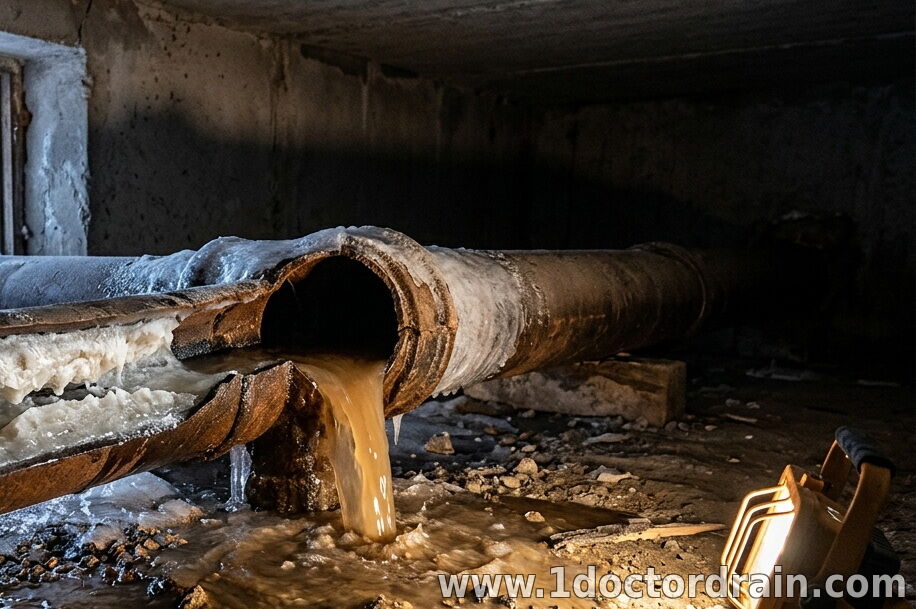
When winter temperatures drop, most homeowners worry about burst supply pipes. However, freezing weather poses an equally severe threat to your home's drainage and sewer lines.
While incoming water supply lines are under constant pressure, drain pipes rely on gravity and smooth, unimpeded flow to carry wastewater away from your home. When freezing temperatures enter the equation, drain lines can quickly freeze, narrow, or collapse—leading to hazardous wastewater backups inside sinks, basements, and showers.
How Cold Weather Triggers Drain Backups
Freezing temperatures cause drain problems through several distinct physical mechanisms:
1. FOG (Fats, Oils, and Grease) Solidification
During warmer months, small amounts of warm liquid grease flushed down the kitchen sink may travel all the way to the municipal sewer line. In winter, however, cold pipe walls chill the wastewater rapidly.
-
As fats, oils, and grease cool down, they instantly congeal and cling to the interior of the pipe walls.
-
Over time, this creates a sticky, ever-thickening layer that traps food particles and hair, severely narrowing the drain opening until a complete blockage occurs.
2. Ice Bridges in Unconditioned Spaces
Drain lines running through uninsulated crawlspaces, exterior walls, or unheated basements are vulnerable to freezing.
-
Small, continuous trickles of water—such as a slow-dripping faucet left on to prevent supply line freezes—can gradually freeze layer by layer inside the cold drain pipe.
-
This process forms an "ice bridge" or ice plug inside the pipe, acting as a solid dam that prevents wastewater from passing.
3. Frozen Plumbing Vents (Stack Frosting)
Your home’s plumbing system relies on roof vents (plumbing stacks) to maintain neutral air pressure and exhaust sewer gases. During extreme cold snaps, warm, humid air rising through the vent stack can freeze upon contact with the freezing outdoor air at the roofline.
-
Frost builds up layer by layer until the vent opening is completely sealed shut (known as "stack frosting").
-
Without proper ventilation, a vacuum is created inside the drainage system, leading to slow-draining sinks, gurgling toilets, and eventually, full backups.
4. Soil Heaving and Pipe Misalignment
In areas experiencing deep frost lines, freezing ground soil expands and shifts (frost heave). This ground movement exerts immense pressure on underground sewer lines, which can lead to:
Common Warning Signs of a Winter Drain Blockage
Catching a freezing drain issue early can save thousands of dollars in restoration costs. Watch for these red flags during cold weather:
-
Gurgling Sounds: Toilets or sinks make bubbling or gurgling noises when another fixture is run, indicating poor venting or a downstream restriction.
-
Multiple Slow Drains: If fixtures on the lowest level of the home (e.g., basement shower or floor drain) begin draining slowly simultaneously, the main sewer line is failing.
-
Foul Sewer Odors: Smelling sewer gas indoors often indicates a blocked vent stack or a dried-out, frozen trap.
Essential Winter Drain Maintenance Tips
| Preventive Action |
Why It Works |
| Never Pour Grease Down the Drain |
Wipe greasy pans with paper towels before washing. Collect cooking oil in containers and dispose of it in the trash. |
| Insulate Exposed Drain Pipes |
Wrap foam pipe insulation or heat tape around drain lines in unheated crawlspaces, attics, or exterior garages. |
| Clear Roof Vents Before Winter |
Safely remove bird nests, leaves, and debris from roof vent stacks before the first hard freeze to maintain proper airflow. |
| Disconnect Outdoor Hoses |
Leaving garden hoses attached traps water in the sillcock and outdoor drain lines, leading to localized freezing and cracked fittings. |
| Schedule a Pre-Winter Drain Cleaning |
A professional hydro-jetting or auger service removes existing scale, roots, and sludge before winter chills make obstructions worse. |
What to Do If Your Drain Freezes
If you suspect an ice blockage or backup in your drainage system:
-
Stop Running Water: Turn off washing machines, dishwashers, and faucets immediately to prevent overflowing sinks or floor drains.
-
Locate the Main Cleanout: Ensure access to your home's main sewer cleanout line remains unobstructed by snow or storage.
-
Apply Gentle Heat: If the frozen section of pipe is visible in an accessible area, use a hairdryer or space heater to gently warm the pipe. Never use an open flame or torch.
-
Call a Professional Plumber: Heavy drain blockages, frozen underground lines, or backed-up main sewers require specialized tools, such as warm-water jetters or professional drain augers, to clear safely without bursting the pipes.
|