2:29 AM HOA Guide: Who’s Responsible for Shared Drain Lines? | |
|
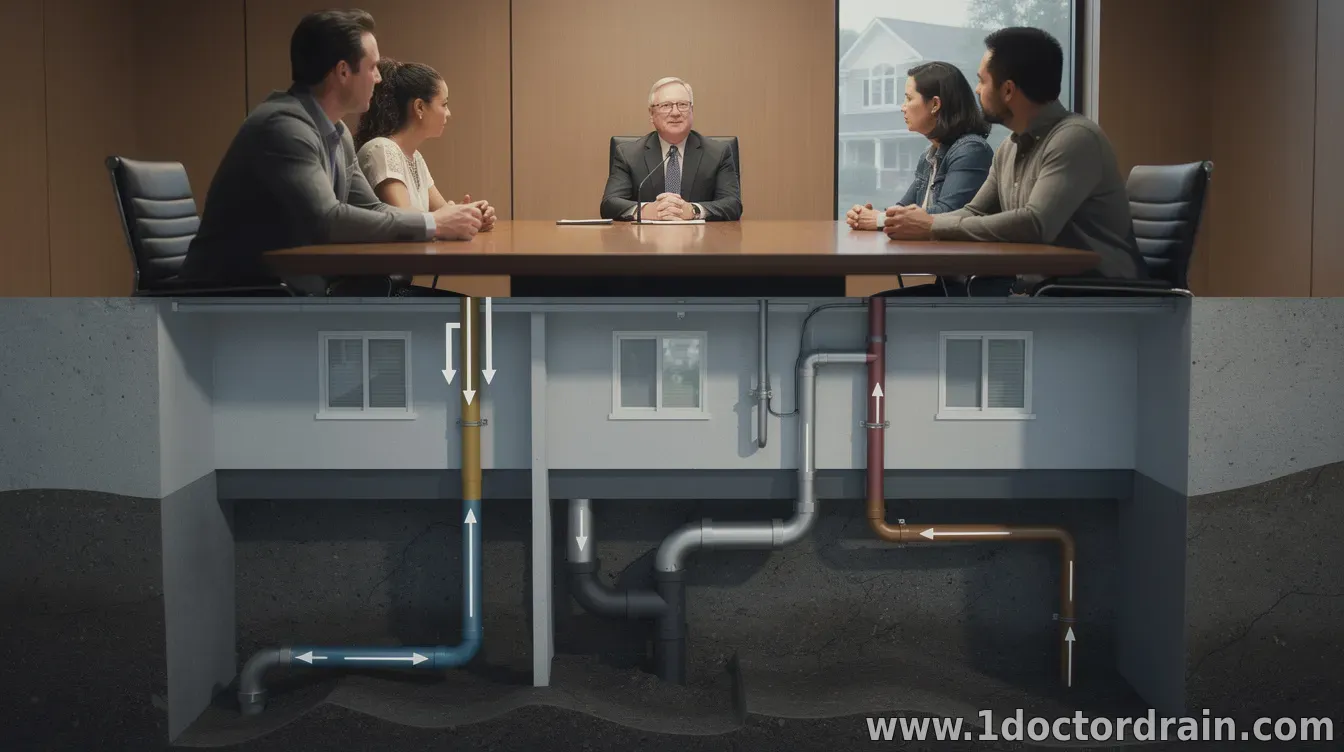
Drain lines that serve multiple lots—such as common lateral pipes, stormwater connections, or sewer leads—can trigger confusing questions in HOA communities. Homeowners may assume the HOA pays because the system is shared, while associations often argue the pipes benefit specific properties or lie within an owner’s boundaries. The truth is usually document-driven: the governing documents and local law typically determine who must maintain and repair these lines.
The first question: are the drain lines part of the HOA’s common area or part of an individual lot?
Most HOAs operate under a framework defined by their CC&Rs (covenants, conditions, and restrictions), bylaws, and applicable state statutes. Start by looking for definitions of common areas, limited common elements, utility systems, and the scope of what the HOA must “maintain,” “repair,” or “replace.” If the shared drain line is explicitly listed or clearly classified as common infrastructure, responsibility typically falls to the HOA.
Some communities also distinguish “limited common elements”—areas or infrastructure reserved for the use or benefit of a specific group of owners, even though they are not owned by an individual. In those cases, an HOA may still be the formal maintainer, but costs can be allocated to the benefiting lots rather than spread across the entire association. Look at location and “serves” language
Even when documents don’t directly name “drain lines,” they may provide enough clues. Clauses that state the HOA maintains “utilities serving the common area” or “infrastructure for the benefit of more than one unit” can be strong indicators that the shared line is a shared responsibility. Conversely, language stating owners maintain plumbing or utilities “within their lot” can shift responsibility to the individual, especially if the pipe primarily serves that property.
Location matters too. Drain lines can run under driveways, landscaping, or parking areas, which may fall under HOA control. But if the line lies entirely within a particular lot and functions as that owner’s private system (even if it connects to a broader network), the HOA may argue the owner controls maintenance for the portion inside the lot boundary. Maintenance vs. damage: the cause can change the answer
Assuming both parties are responsible for different segments or aspects of the system, the cause of the failure can also affect who pays. For example, if a blockage is traced to misuse or homeowner-installed alterations, the HOA may seek homeowner reimbursement for portions tied to the owner’s actions. If the issue results from aging infrastructure, tree root intrusion, or general system defects consistent with normal wear, associations are more likely to cover repair—particularly if the affected section is categorized as common.
Practical disputes often turn on documentation: inspection reports, camera scope results, and “as-built” drawings. Getting a licensed plumbing contractor or drain specialist to map the line and identify which segment serves which properties can clarify responsibility faster than relying on assumptions. What homeowners should do before hiring repairs
When there’s standing water, slow drainage, or suspected pipe damage, homeowners are understandably tempted to fix it quickly. Still, acting prematurely can complicate cost recovery. In many HOAs, you must follow “repair notification” rules, obtain approval for work that affects shared infrastructure, and use approved vendors—especially if the work could disrupt common elements or affect system integrity.
When to escalate
If the HOA and homeowner disagree, escalation typically follows the association’s internal process—such as submitting a written request, opening a work order, or requesting a board decision. Many disputes improve once both sides see the same technical findings: where the line runs, what it serves, and whether it’s part of the HOA’s defined infrastructure.
If resolution still isn’t possible, consider seeking legal advice tailored to your state and circumstances. HOAs and homeowners can face different obligations under state law, and some jurisdictions place specific requirements on associations regarding common infrastructure maintenance and cost allocation.
Shared drain lines are rarely “one-size-fits-all.” The most reliable path is to use your governing documents as a baseline, pair that with technical evidence about the pipe’s location and function, and ensure repairs follow HOA procedures. Doing so can reduce costly delays—and help each party fulfill the responsibility they agreed to in the community documents.
| |
|
| |
CALL ☎ Subscribe 👆
Next & Previous posts
CONTACT US 📩
Submit the form, we'll contact you as soon as possible!