
11:25 PM French Drains vs Storm Drains: Key Differences Explained | |
|
French drains and storm drains are often mentioned together, but they’re designed for different purposes. In many neighborhoods, both systems exist side-by-side: one to control water around a specific property area, and the other to manage runoff across streets and public spaces. What a French drain is (and what it does)
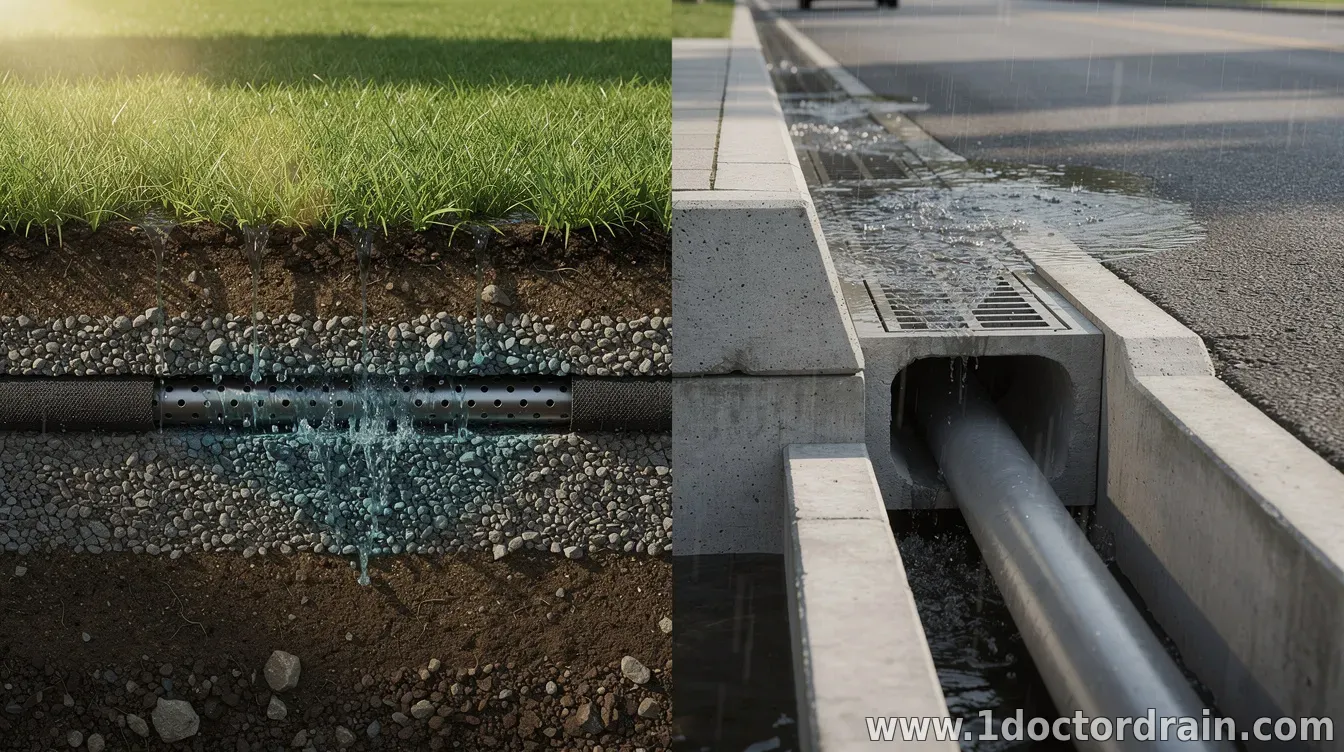
A French drain is a localized drainage system typically installed below the ground. It usually consists of a trench filled with gravel and, in many modern designs, a perforated pipe that collects and redirects groundwater or surface water away from an area—such as a basement wall, crawlspace perimeter, or yard grading points.
In practice, a French drain helps reduce hydrostatic pressure by lowering the water table near foundations. Because it’s built for a specific site, it’s commonly used when water appears in one place after heavy rain or during wet seasons. What a storm drain is (and what it does)
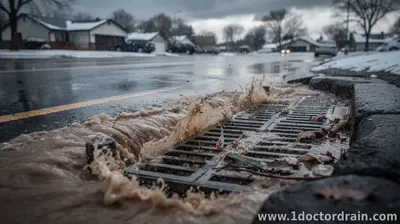
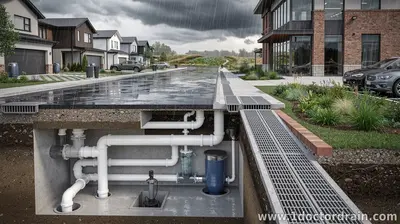
A storm drain is broader infrastructure meant to capture and convey stormwater runoff. It generally includes inlets (like curb grates), underground pipes, catch basins, and sometimes detention or retention features. Its job is to carry rainwater efficiently from streets, parking areas, and other paved surfaces to an outfall—such as a nearby watercourse—or to a treatment/retention system.
Unlike a French drain, which focuses on draining around a property, storm drains are engineered for the volume and flow patterns of runoff across larger areas. How they handle water differently
The main distinction is the source and pathway of water. French drains tend to intercept water that moves through soil—often groundwater seepage or water that collects near a foundation—then guide it to a discharge point such as a sump, dry well, or daylight outlet.
Storm drains, by contrast, capture water that runs along the surface toward inlets, then transport it through a municipal or site-wide network designed to prevent flooding from rainfall-driven runoff. When each system is typically the better choice
French drains are commonly selected for property-level issues: wet basements, damp crawlspaces, saturated landscaping, or persistent soggy spots where soil moisture needs to be reduced. They’re often paired with proper grading so water doesn’t simply flow back toward the problem area.
Storm drains are generally the right fit when the goal is to manage runoff over a wider area, particularly where paved surfaces contribute to rapid water flow. In residential settings, that may involve roof downspout discharge strategies that connect safely to the right drainage route—or, where allowed, tie-ins to existing stormwater infrastructure. Important practical considerations
Both systems require correct siting, sizing, and outlet design to function properly. For example, a French drain’s effectiveness depends on trench depth, gravel/pipe selection, and where the collected water goes. A storm drain system depends on inlet placement, pipe capacity, and local stormwater rules.
Before installing or modifying any drainage work, homeowners should consider consulting local codes and—where needed—licensed professionals, because improper connections can contribute to basement moisture problems, erosion, or overloading of public systems.
Ultimately, the “right” choice isn’t about one system being universally better—it’s about matching the drainage method to the water source and the area being protected.
| |
|
| |
CALL ☎ Subscribe 👆
Next & Previous posts
Related materials:
CONTACT US 📩
Submit the form, we'll contact you as soon as possible!