
1:36 AM Trenchless vs. Traditional Sewer Line Replacement Cost | |
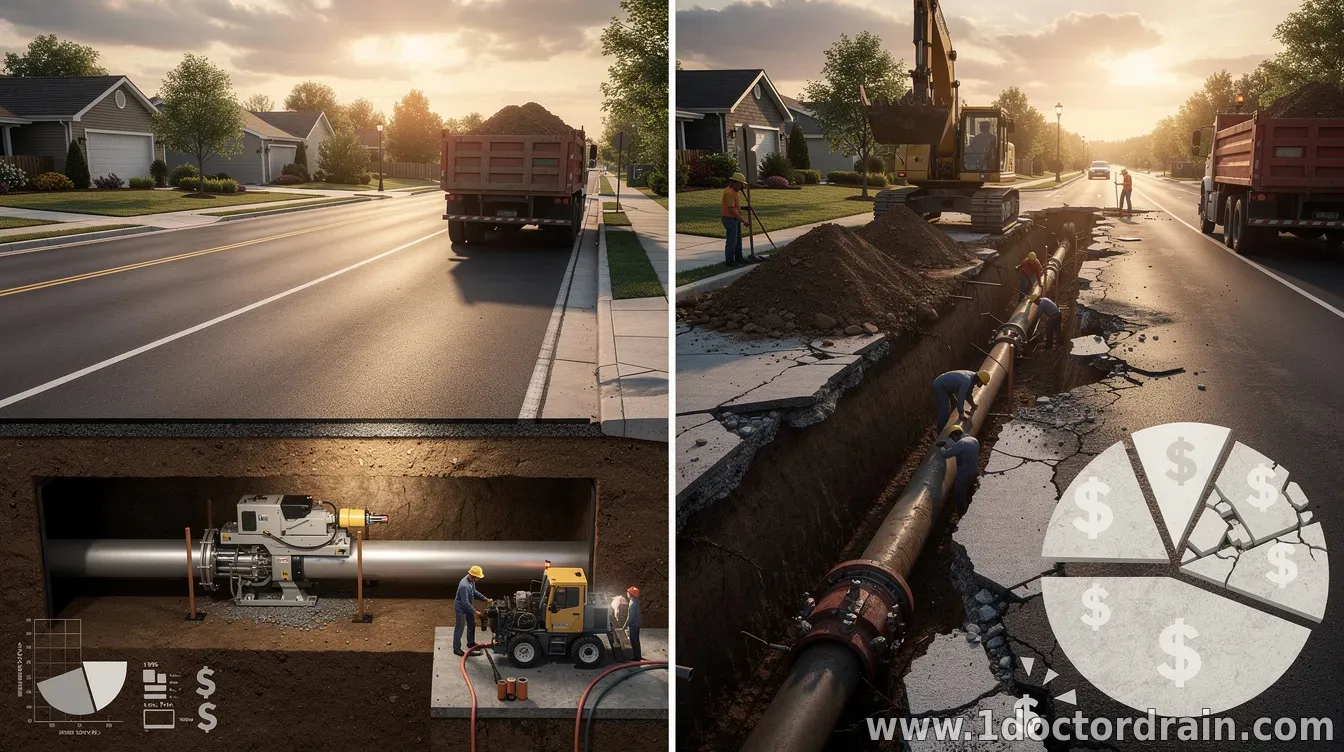
Sewer line replacement is often unavoidable when a main line is damaged by root intrusion, corrosion, settling, or repeated leaks. But the total cost depends largely on the replacement method—most notably whether the contractor excavates the yard (traditional) or installs the line with minimal digging (trenchless).
Below is a practical cost breakdown comparing trenchless versus traditional sewer line replacement, along with the biggest variables that can move a quote up or down. Typical pricing ranges: what homeowners often see
Because locations, soil conditions, and pipe length vary widely, pricing is commonly quoted in ranges. In general, trenchless projects may carry a higher per-foot price for the installation itself, but they can reduce “soft costs” like restoration, landscaping replacement, and restoration delays. Traditional replacement can be less expensive on pipe-install materials but can escalate quickly due to excavation and surface restoration.
Rule of thumb: Trenchless often reduces disruption and restoration costs; traditional methods can be cheaper in straightforward sites but become more expensive when digging is extensive. Cost components in traditional sewer line replacement
Traditional sewer line replacement usually involves digging a trench from a planned access point to the damaged section. That approach requires significant labor, equipment, and restoration work after installation.
Common cost components include:
In many markets, restoration is the swing factor—if the line runs under a driveway or walkway, surface replacement can become a major line item. Cost components in trenchless sewer line replacement
Trenchless methods aim to install a new pipe with minimal excavation. Two of the most common approaches are pipe bursting (replacing the existing pipe by breaking it while pulling the new line into place) and Cured-in-Place Pipe (CIPP) lining (inserting a liner into the existing pipe and curing it to form a new interior wall).
Common cost components include:
While trenchless can still require excavation—particularly for longer runs or difficult layouts—the amount of surface restoration is frequently lower than in traditional replacement. How the final cost is determined (for both methods)
Regardless of approach, contractors typically adjust pricing based on project specifics. The biggest drivers include:
Break-even: when trenchless tends to win
Trenchless replacement tends to be more cost-effective when excavation would be expensive or disruptive—such as when the sewer line runs under paved areas, landscaping that’s costly to replace, or where minimizing disturbance is a priority for homeowners. It can also help reduce the time the property is “under construction,” which may lower indirect costs like temporary driveway access arrangements.
However, if the line has conditions that can’t be addressed by lining or bursting—such as extensive structural failures, severe misalignment, or constraints that limit tooling—traditional replacement may be the only practical option. What homeowners should ask before comparing quotes
To accurately compare trenchless and traditional proposals, homeowners should request a scope that clearly states what is included. Helpful questions include:
Ultimately, the “cheaper” option is often the one that minimizes expensive restoration and disruption while still meeting the engineering requirements of the sewer line. A well-scoped quote—backed by camera inspection and a clear method plan—will make the cost comparison far more reliable than comparing sticker prices alone.
| |
|
| |
CALL ☎ Subscribe 👆
Next & Previous posts
CONTACT US 📩
Submit the form, we'll contact you as soon as possible!