0:16 AM Cracked vs. Collapsed Sewer Line: Differences & Fixes | |
Sewer problems are often reported as slow drains, gurgling sounds, or sewage odors, but the underlying damage can range from a crack to a full collapse. While both conditions may lead to backups, a cracked sewer line is usually a structural defect that can be addressed with targeted repairs, whereas a collapsed sewer line indicates a loss of pipe integrity that commonly requires more extensive work. What a cracked sewer line means
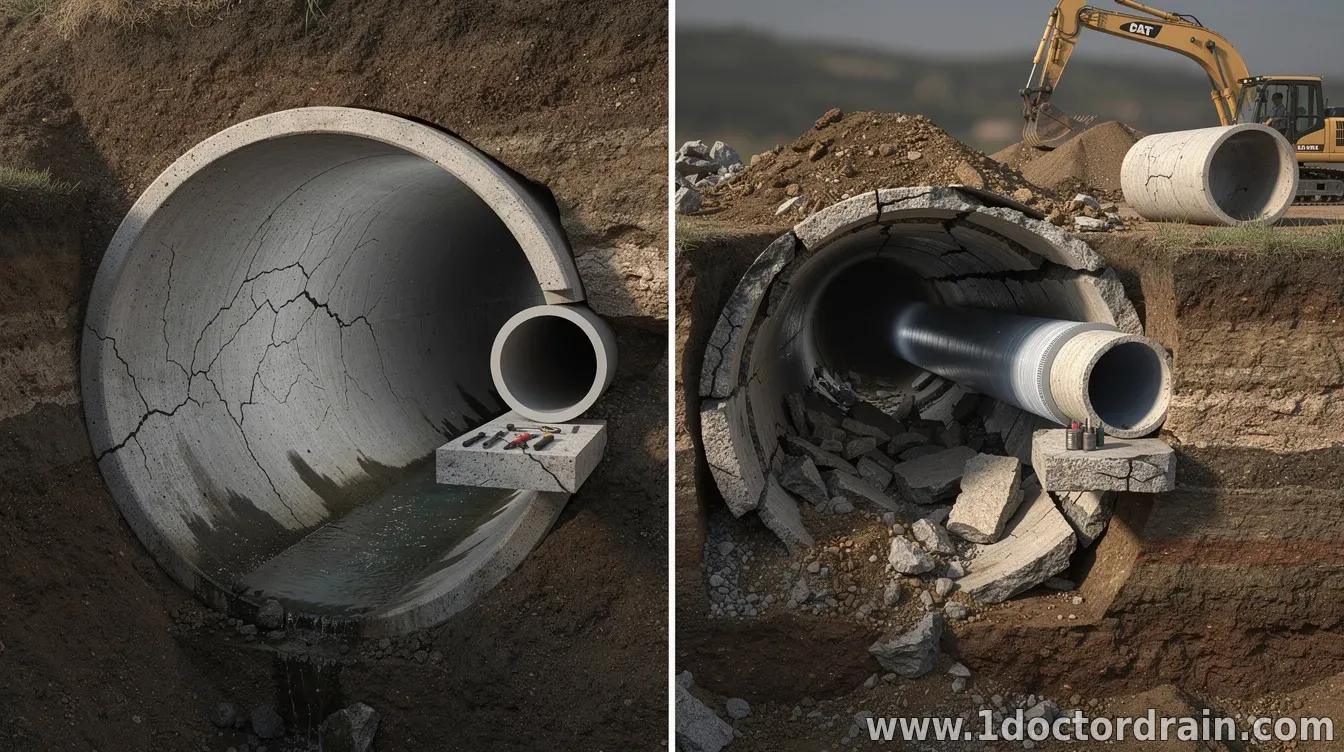
A cracked sewer line typically involves a break or fracture in the pipe wall. Depending on where and how wide the crack is, wastewater may leak into surrounding soil and groundwater or allow roots and debris to enter. In many cases, flow is reduced but the pipe still carries waste—at least until conditions worsen.
Common signs include recurring clogs, minor surface seepage after heavy rain, damp ground near cleanouts, or detectable odors. Camera inspections often show hairline fractures, displaced joints, or cracks aligned with older settling or pipe aging. What a collapsed sewer line means
A collapsed sewer line means the pipe has caved in or significantly deformed, restricting flow dramatically. This can occur due to soil pressure, sinkholes, tree-root intrusion, pipe corrosion, or repeated cycles of backup and stress. Once collapse begins, the pipe’s ability to move wastewater is compromised, and complete failure can follow.
Signs tend to be more severe: frequent backups in multiple fixtures, strong sewage smells, standing water or wet spots above the line, and visible disruption near the suspected route. During inspection, a collapsed section may appear as crushed pipe, blocked flow, or sections where the camera can’t pass without bypassing. Key differences that affect repair choices
Although both issues stem from pipe deterioration or stress, the repair strategy often depends on the condition of the pipe interior, the length of damaged segment, and whether the damage is localized or widespread.
Repair options for cracked vs. collapsed lines
Repair methods vary by local plumbing codes, pipe material, accessibility, and the size of the affected area. Still, there are common categories contractors consider.
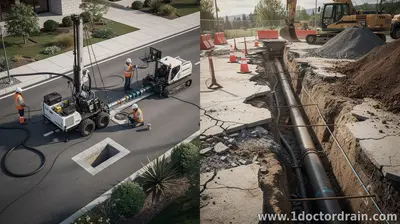
For a cracked sewer line, options may include localized patching, joint repairs, or spot rehab designed to seal and stabilize the damaged area. In some scenarios, trenchless methods such as pipe lining (a cured-in-place liner) are used to restore structural integrity without full excavation. If the crack is near a connection or joint, the repair may focus on restoring proper alignment and sealing.
For a collapsed sewer line, the approach is often more extensive. If the pipe is crushed, broken, or blocked, trenchless relining may not be possible or may only work if the pipe is structurally suitable for lining after assessment. More commonly, crews may recommend excavation and full replacement of the collapsed segment—especially where the camera shows significant deformation or complete restriction. In other cases, a combination of bypass pumping, targeted replacement, or staged repairs may be planned to reduce disruption.
In both cases, many contractors also address contributing causes—such as root intrusion or improper slope—so the problem doesn’t recur after the visible damage is fixed. Why professional inspection matters
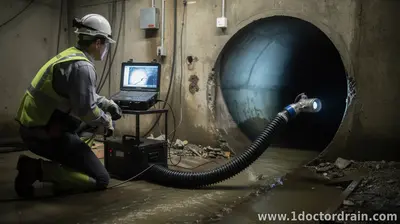
Because symptoms can overlap, the most reliable way to distinguish cracked from collapsed damage is a CCTV camera inspection that maps the pipe’s condition and measures flow restriction. A clear diagnosis helps avoid unnecessary repairs and reduces the likelihood of repeated failures.
If you’re dealing with sewage backups, persistent odors, or wet spots along the sewer route, acting sooner can prevent minor cracking from progressing into structural collapse—and can minimize the scope of repair.
| |
|
| |
CALL ☎ Subscribe 👆
Next & Previous posts
Related materials:
CONTACT US 📩
Submit the form, we'll contact you as soon as possible!