1:11 AM Storm Drain Backup: What Homeowners Can and Can’t Control | |
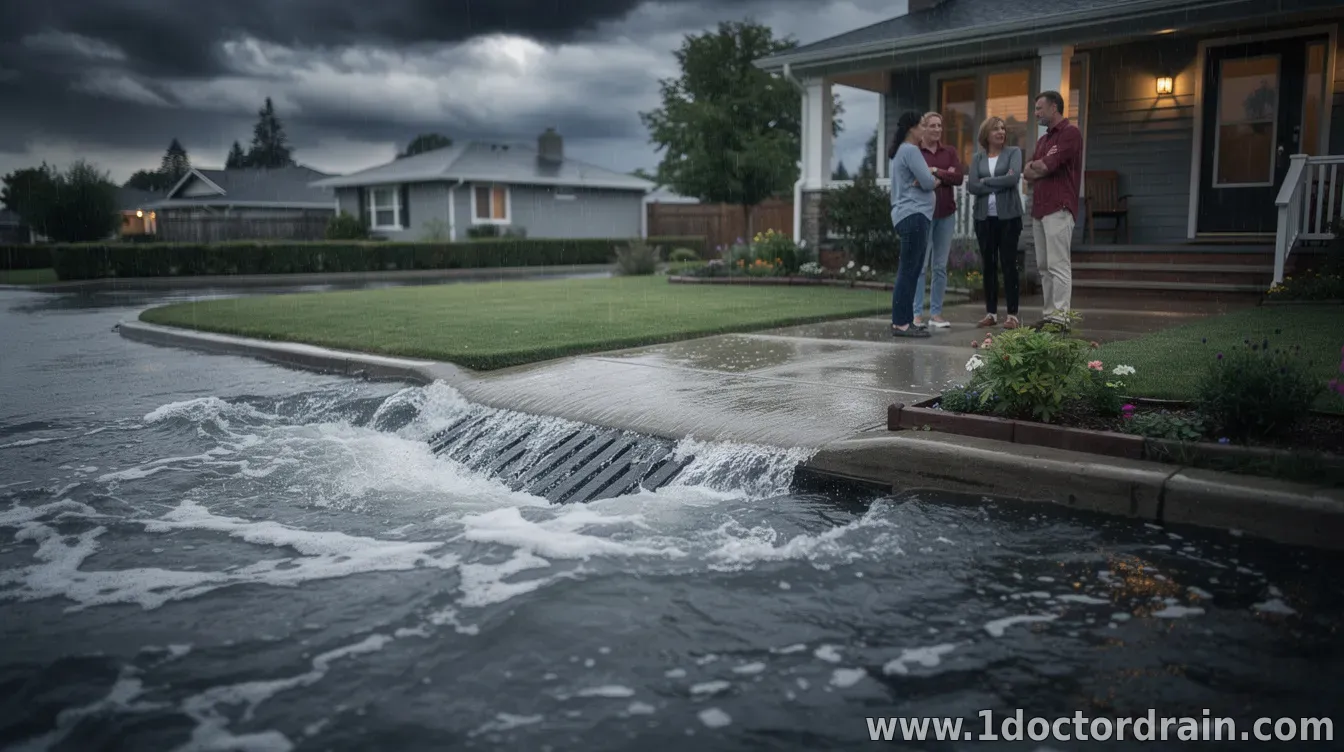
Storm drain backups often happen when rainfall overwhelms local drainage capacity—sometimes immediately during intense storms, and other times as water accumulates in low-lying areas. While homeowners can take steps to limit damage and improve readiness, several key drivers are determined by municipal infrastructure and storm conditions.
Below is what homeowners can influence, what they can’t, and how to respond when water starts to rise. What homeowners can control
Keep nearby inlets clear. Leaves, trash, yard debris, and sediment can clog curbside drains and reduce how quickly water moves away. Regularly clearing visible debris around storm inlet grates helps keep flow lanes open.
Maintain your property’s runoff paths. Check that downspouts, grading, and surface drainage direct water toward appropriate flows (such as a street inlet or approved drainage area) rather than into basements or garages. Small changes—like re-positioning a downspout extension—can meaningfully reduce pooling near foundations.
Use sensible, localized landscaping choices. Where feasible, maintain vegetation and avoid creating barriers that redirect water toward your home. Proper mulch depth, erosion control, and avoiding over-compaction near drainage routes can improve how quickly water soaks in or moves off-site. What homeowners can’t control
Storm size and intensity. Even well-maintained drainage systems struggle during extreme rainfall. When the volume and duration exceed design limits, backups can occur regardless of homeowner upkeep.
Upstream conditions and shared infrastructure. What happens on other blocks, upstream channels, or at junction points can trigger overflows. If the local storm sewer network is partially blocked, hydraulically overloaded, or impacted by flooding further downstream, individual households usually have limited ability to fix the root cause.
Capacity limits, siltation, and aging systems. Many jurisdictions rely on pipes and catch basins installed decades ago. Routine maintenance may be scheduled, but delays, budget constraints, sediment buildup, and long-term deterioration can all affect performance during major storms. How to respond when backup happens
During a storm, focus on safety first. Avoid walking into fast-moving or unknown water; it can contain debris and contaminants. If water begins to enter structures, prioritize keeping electrical systems protected, and follow local guidance on how to shut off power safely when needed.
After the rain, document impacts with photos and notes on where water entered, how high it rose, and how long it remained. This record can be useful for insurance claims and for reporting to the city or relevant stormwater authority.
Homeowners should also report clogged or damaged inlets to the appropriate municipality, especially if the same location repeatedly contributes to backups. While cities can’t guarantee perfect performance in extreme weather, timely maintenance requests can help reduce future incidents. When to call the city or a professional
If backups persist after storms with moderate rainfall, if you see recurring blockage at a specific inlet near your property, or if you notice structural signs like repeated foundation seepage, contact your local public works or stormwater department. For internal flooding issues, qualified plumbers or drainage contractors can assess whether your yard grading, downspouts, sump systems, or interior waterproofing are contributing to water infiltration.
Ultimately, storm drain backups are often a shared systems issue—shaped by weather, infrastructure, and upstream flow—but homeowners still play an important role in reducing clogging near their properties and preparing for the worst when heavy rain hits.
| |
|
| |
CALL ☎ Subscribe 👆
Next & Previous posts
Related materials:
CONTACT US 📩
Submit the form, we'll contact you as soon as possible!