1:11 AM Power Rodding: What Happens During a Service, Step by Step | |
Power rodding is a high-pressure, mechanical method used to clear obstructions in drains and sewer lines—such as hair, grease, scale, roots, or compacted debris. If you’re wondering what the service actually looks like, here is a typical step-by-step walkthrough. 1) Initial call-out, assessment, and safety setup
The technician arrives and discusses the symptoms you’ve noticed (e.g., slow drainage, gurgling sounds, or foul odours). They’ll inspect accessible pipework and assess where the blockage may be occurring. Before starting, the area is set up for safety—protecting surrounding surfaces and controlling access if needed. 2) Locating the blockage
In many cases, the team will confirm the likely location of the obstruction. This may involve using access points such as cleanouts or inspection chambers. Where available, CCTV drain inspection may be used to pinpoint where the blockage is and assess its type (soft blockage vs. something structural or root-related).
Once the blockage location is confirmed, the technician prepares the rodding equipment—typically a cable or rod system designed to transmit force down the pipe. The machine settings are chosen based on pipe size/material and the nature of the obstruction. 3) Insertion and initial clearing attempts
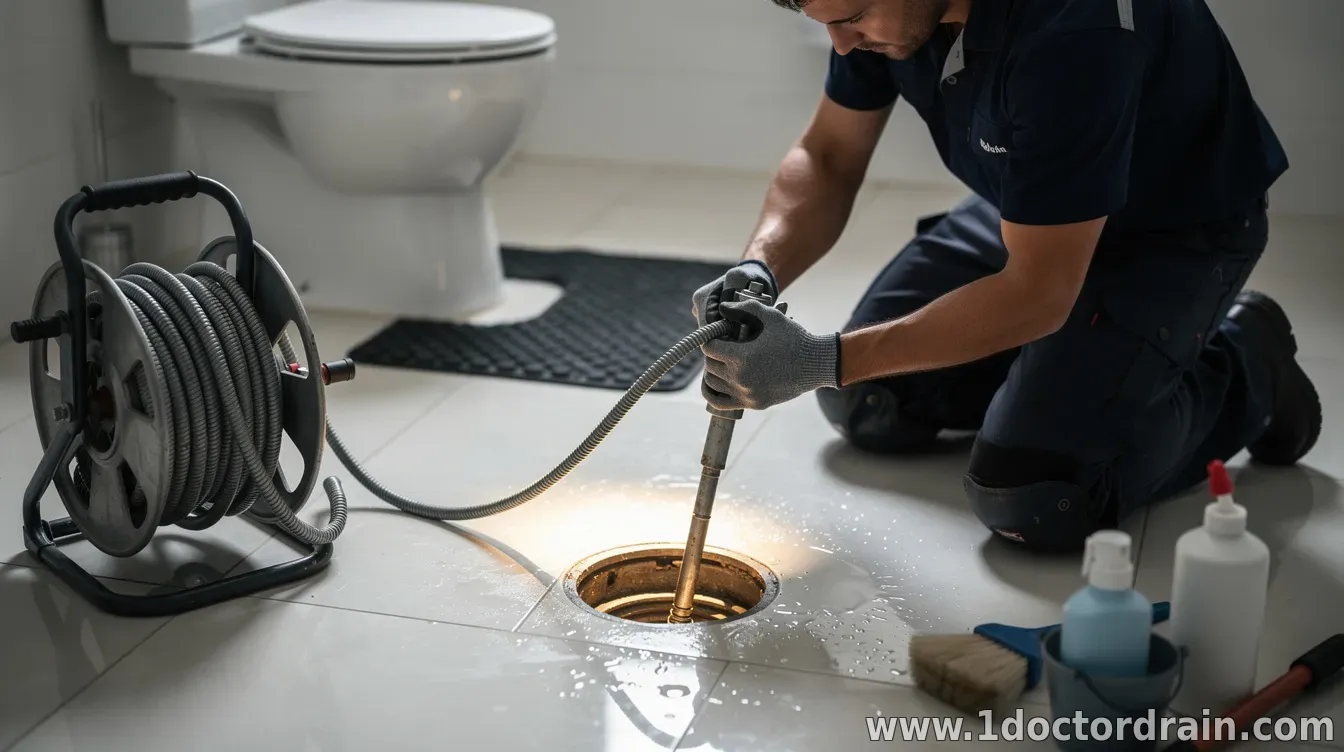
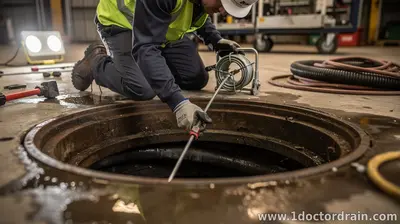
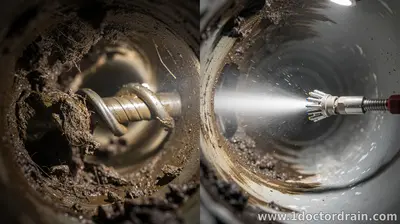
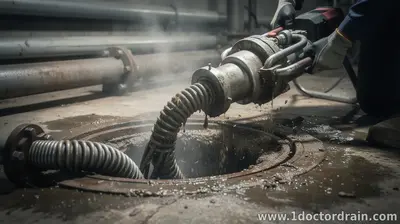
The rodding tool is fed into the drain line from an appropriate access point. The technician then advances the tool while applying mechanical force to break up or dislodge the blockage. As the obstruction loosens, fragments can be pushed forward or lifted out of the pipe path.
Throughout this stage, the technician monitors progress and may adjust technique—slowing down to work through stubborn sections or changing the tool configuration to target the obstruction more effectively. 4) Flushing and checking flow
After the main blockage is cleared, a follow-up flush may be carried out to remove loosened debris and restore steadier flow. The technician will then test drainage—often by running water or checking how quickly water passes through—while watching for signs that the blockage has truly been resolved.
If there are still symptoms or the flow remains restricted, the service may continue with additional targeted clearing in the same section or at another likely location. 5) Final verification and documentation
Many providers perform a final verification step, which can include another inspection (sometimes CCTV) to confirm that the pipe is clear and to check for ongoing issues like minor damage, root intrusion, or persistent deposits.
The technician should explain what was found, what was removed or cleared, and whether the pipe now appears fully operational. If further work is recommended—such as repairs, lining, or root management—the next steps are typically outlined at this stage.
Finally, the area is cleaned up and any access points are left in safe, usable condition. You’ll generally be advised how to monitor the system after the service and what to avoid to reduce the chances of a repeat blockage.
| |
|
| |
CALL ☎ Subscribe 👆
Next & Previous posts
Related materials:
CONTACT US 📩
Submit the form, we'll contact you as soon as possible!