0:36 AM Mainline Rodding vs Power Rodding: Key Differences | |
When a drain won’t flow, plumbers often turn to rodding—a method that pushes a tool through a pipe to break up or remove the blockage. Two common options are main line rodding and power rodding. While both aim to clear the line, they use different mechanics and are typically chosen for different blockage types and risk levels. Main line rodding: manual control for typical clogs
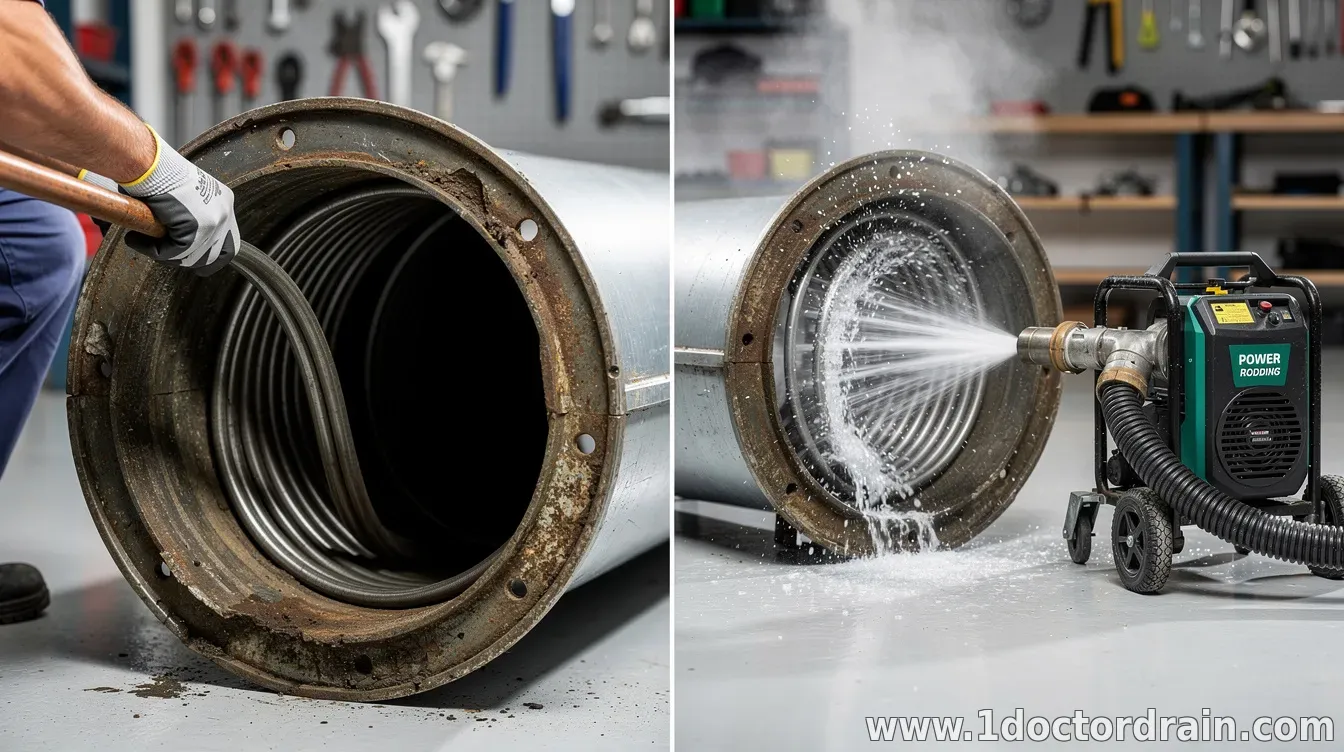
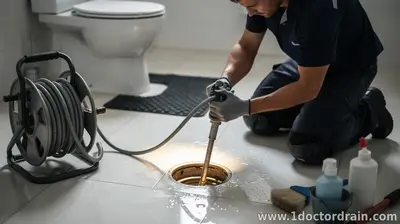
Main line rodding is generally a manual or hand-operated approach. A rod or cable is fed into the drain and advanced through the pipe while a technician applies controlled force to break up the obstruction. Because the operator can feel resistance and adjust pressure, this method is often favored for more routine situations where the clog is not extreme.
It’s commonly used for issues like hair, soap buildup, minor grease deposits, or partial blockages where the tool can be advanced with manageable effort. In many cases, main line rodding is also preferred when you want careful, incremental progress to reduce the chance of unnecessary stress on older pipework. Power rodding: higher force for tougher blockages
Power rodding uses a powered drain-cleaning machine to drive the cable/auger with greater force and speed. Instead of relying solely on hand pressure, the machine supplies consistent propulsion, which can help in more stubborn conditions such as heavy scale, compacted debris, or clogs that resist manual pushing.
Power rodding can be particularly effective when a blockage is deeper in the main line or when repeated manual attempts haven’t resolved the issue. The tradeoff is that the increased force requires correct machine settings, appropriate tooling, and correct technique—because the same power that helps clear a clog can also increase the risk of damaging sensitive piping if used improperly. Key differences at a glance
Choosing between the two usually comes down to clog severity, pipe condition, and access to the problem. Here are the practical differences:
When to use main line rodding
Main line rodding is often the right first choice when:
When to use power rodding
Power rodding is commonly recommended when:
In these cases, power rodding’s additional mechanical energy can shorten the time spent fighting the obstruction and improve the chances of complete clearance.
Choosing wisely: safety and outcomes
Although both methods can clear drains effectively, the “best” option depends on more than just the clog. Pipe material, diameter, bends, and the location of the blockage all influence what tooling and approach are appropriate. If a line repeatedly clogs, rodding alone may not be the final answer—diagnostic steps (such as inspection) can help determine whether there’s a structural issue contributing to the blockage.
For most property owners, the safest approach is to consult a licensed technician who can assess the drain, choose the right method, and verify clearance properly. In general terms, think of main line rodding as a controlled option for routine blockages and power rodding as a stronger tool for stubborn or compacted clogs—used with care to match the pipe’s needs.
| |
|
| |
CALL ☎ Subscribe 👆
Next & Previous posts
Related materials:
CONTACT US 📩
Submit the form, we'll contact you as soon as possible!