
0:16 AM Spring Drain Checklist for Illinois Homeowners | |
Illinois homeowners know the rhythm: snow piles up, then temperatures swing, and spring runoff arrives fast. If drainage systems aren’t ready, that surge can lead to overflowing gutters, basement seepage, soggy lawns, and erosion around foundations. A quick spring drain check can prevent small blockages from turning into costly repairs.
Start with the roofline: inspect gutters and downspouts for winter debris such as leaves, twigs, grit, and ice-dam residue. Look for sagging sections, separated joints, and signs of water spilling over the edges during melt periods. Clear visible clogs and flush downspouts with a hose to confirm water flows freely.
Move to downspout discharge: make sure downspouts extend far enough away from the house, typically several feet, so runoff doesn’t pool at the base. Check for splash blocks or underground extensions that may have shifted during freeze-thaw cycles. If water appears to be wetting walls or collecting near entrances, adjust discharge and clear any buried portions. Check surface grading and yard drainage
Next, examine the ground around your home. Surface grading should slope away from the foundation so water doesn’t migrate inward. Watch for depressions where meltwater collects, especially near walkways, patios, and driveways. Refill low spots with appropriate material (not topsoil that can wash away easily) and remove obstructions that block intended flow paths.
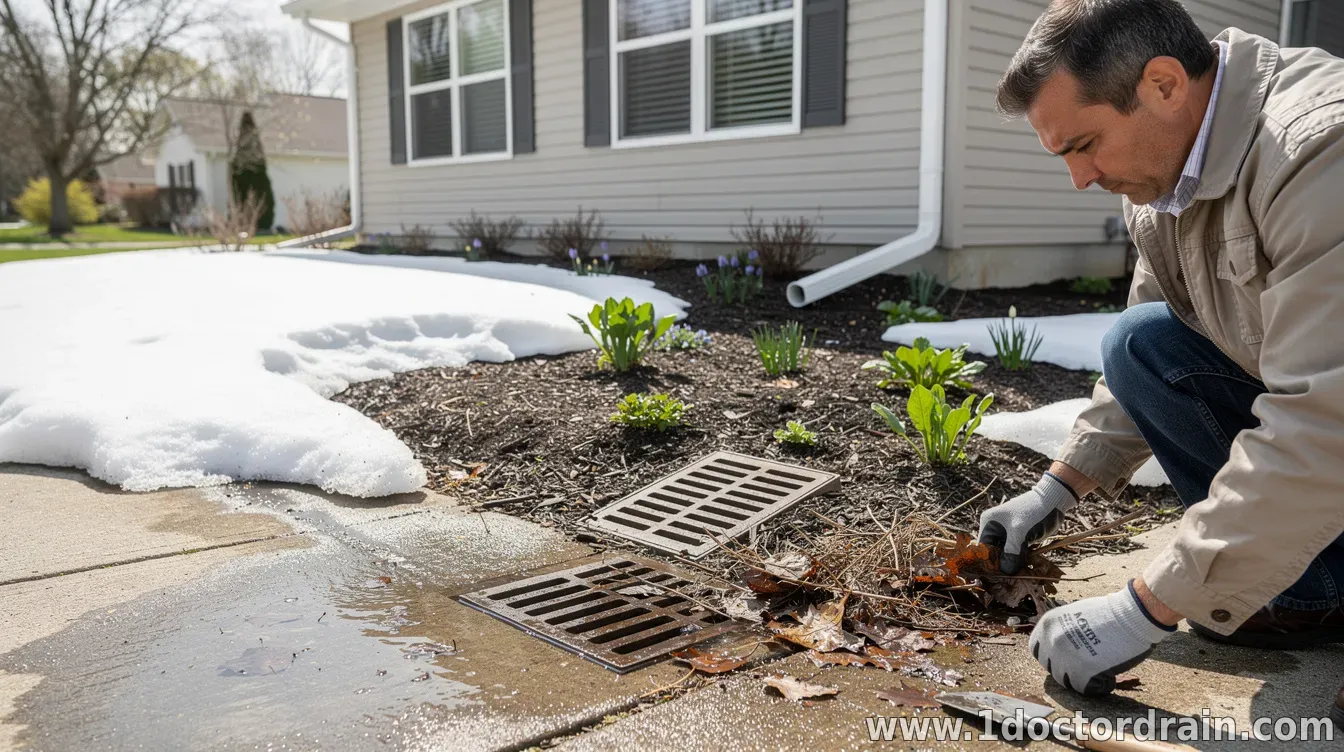
Inspect swales, ditches, and storm drains: if your property includes a swale or neighborhood drainage inlet, clear leaves and debris that can restrict flow. Confirm that grates are not clogged and that there’s no standing water that shouldn’t be there after a normal rainfall. If you’re near a catch basin, ensure it isn’t surrounded by material that funnels runoff back toward the foundation. Focus on foundation protection
Drainage failures often show up at the foundation first. Look for cracks or gaps around window wells, basement bulkheads, and exterior wall penetrations where water can enter. Check that exterior caulking and seals are intact and that window well covers fit properly. If you have a sump pump, test it and verify the discharge line is clear and directing water away from the home.
Don’t overlook interior warning signs: after heavy melt or rain, monitor for damp spots, musty odors, or water along the perimeter. These clues can indicate that exterior drainage, interior sump performance, or waterproofing details need attention. For persistent issues, consider a professional assessment to avoid repeated freeze-thaw damage. Verify for the next freeze-thaw cycle
Spring work also sets you up for late-season temperature swings. After clearing and repairs, revisit your system after a rain to confirm water moves as expected. Ensure downspout extensions remain secure, gutters aren’t re-collecting debris due to nearby trees, and that any temporary fixes won’t wash out. Taking a few hours now can reduce the risk of recurring clogs later in the year.
To keep your drainage system reliable, consider setting a recurring seasonal routine: gutter inspections in early spring and fall, a downspout flush after major debris storms, and a quick yard check after heavy rain. If you’re unsure about grading, sump pump sizing, or how your underground drainage ties into municipal systems, local drainage professionals and home inspectors can help identify the fastest path to long-term protection.
| |
|
| |
CALL ☎ Subscribe 👆
Next & Previous posts
CONTACT US 📩
Submit the form, we'll contact you as soon as possible!