1:33 AM High-Rise Drain Stacks: Common Problems and Solutions | |
In high-rise buildings, drain stacks are the backbone of daily wastewater evacuation. Yet stack systems are under constant pressure—high fixture demand, long vertical runs, and aging components—so problems can develop quietly before they become visible as leaks, blockages, or persistent odors. Maintenance teams typically see recurring failure patterns across buildings, from incorrect venting to pipe deterioration and installation details that make performance degrade over time. Addressing these issues early helps prevent costly floor-by-floor disruptions and repeat service calls. 1) Slow drainage and recurring clogs
One of the most common stack-related complaints is slow draining, especially when multiple fixtures are used in sequence. In many cases, the root cause is partial blockage caused by grease, hair, mineral scaling, construction debris, or non-flushable materials that accumulate over time.
What to do: Facilities often start with targeted investigation at floors nearest the symptom and in stack base sections, then proceed to professional cleaning (such as mechanical augering or hydro-jetting, depending on pipe condition). After clearing the issue, teams review occupant guidance and interceptor performance (e.g., grease traps) to reduce recurrence. 2) Gurgling, sewer gas odors, and venting faults
Gurgling sounds, bad smells in bathrooms, and “bubbling” in floor drains can indicate pressure imbalances in the stack system—often tied to venting issues. If vents are blocked, improperly routed, or damaged, negative and positive pressure can push gases or affect trap seals.
What to do: Check vent terminations for blockages (bird nests, debris, ice where applicable), verify vent pipe condition, and confirm vent-to-drain connections comply with current plumbing requirements. Where seals are compromised, replacing failing wax seals, gaskets, or trap components can restore proper airflow and reduce odors. 3) Leaks at joints, sleeves, and penetrations
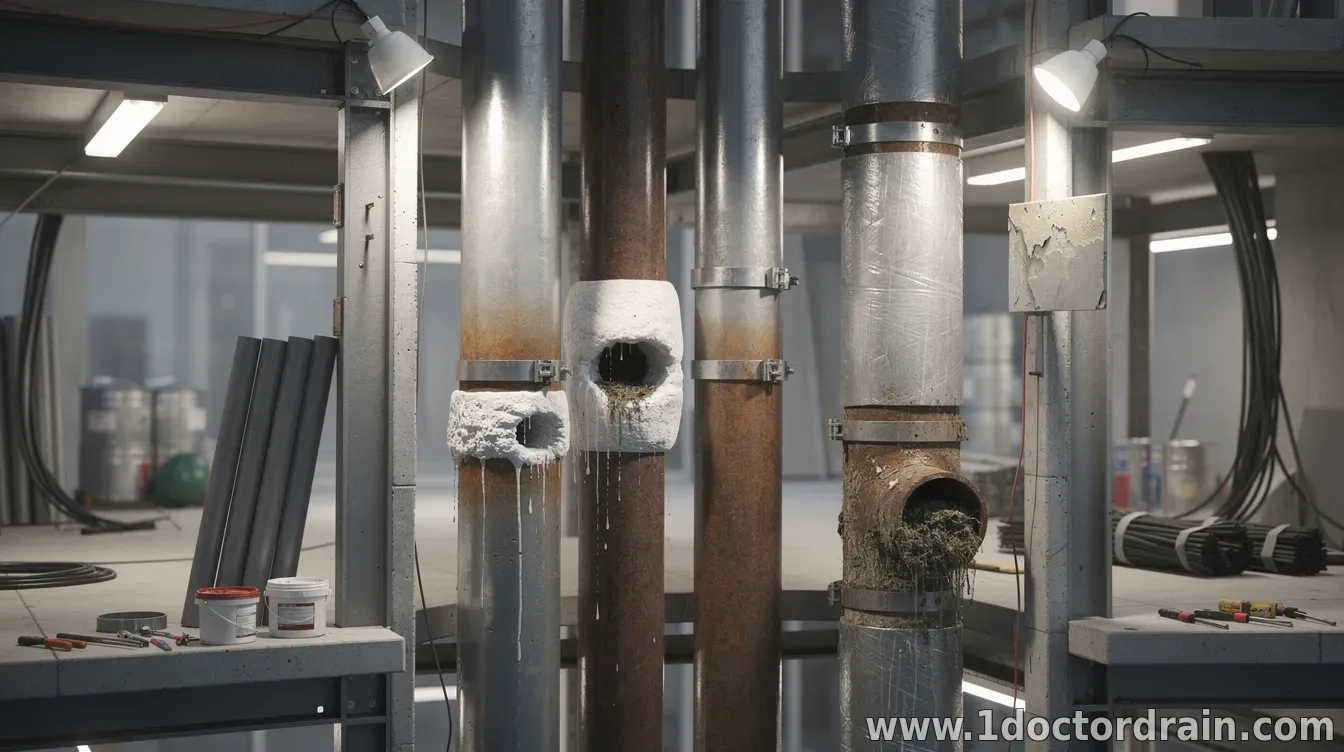
Leaks in high-rise stacks frequently appear at connections where pipes intersect walls, slabs, fire-rated assemblies, or penetrations through structural elements. Over time, differential movement, poor sealing at joints, or aging gaskets can allow water to seep into concealed spaces.
What to do: Use moisture mapping and careful inspection around couplings, cleanouts, and sleeve interfaces. Repair strategies may include resealing joints with compatible materials, replacing corroded sections, and addressing firestopping details to maintain both watertight integrity and code compliance. 4) Corrosion and scaling inside aging pipes
Many older buildings experience internal roughening from corrosion (especially in metal piping) or scaling/mineral buildup that narrows flow paths. The result can be a gradual decline in capacity—leading to backups that get worse with peak occupancy.
What to do: Condition assessment is key. Teams may use inspection cameras (CCTV) to evaluate pipe diameter loss, surface pitting, or deformation. Depending on findings, options can include cleaning followed by targeted lining or replacement of problem segments to restore hydraulic performance. 5) Water hammer, vibration, and noise
High occupancy and rapid fixture discharge can contribute to noisy stack behavior—sudden surges can create banging, vibration, or water hammer. While some noise is normal, persistent or worsening sounds may point to air management issues, suboptimal routing, or poor support and anchoring.
What to do: Review pipe supports, hangers, and alignment to ensure proper restraint against movement. In some cases, installing or correcting air-acceleration devices or improving stack vent performance can reduce pressure surges. Documenting when noises occur (specific floors, times, fixture types) helps pinpoint the trigger. 6) Maintenance gaps during renovations and tenant turnover
Renovations can introduce risk when existing stack connections are altered, capped incorrectly, or retrofitted without proper verification. Similarly, tenant turnover can lead to fixture replacements that change discharge patterns, affecting how the stack system handles flow.
What to do: Standardize inspection checklists for renovation tie-ins and post-work verification. For tenant-provided or contractor-installed fixtures, require confirmation that drain sizes, venting compatibility, and seal integrity match the building’s plumbing configuration.
Bottom line: Reliable high-rise drain stacks depend on more than unclogging problems when they surface. A structured approach—investigating pressure balance and venting, inspecting joints and penetrations for leaks, assessing internal pipe condition, and verifying work quality after renovations—helps reduce repeat failures and keeps residents’ bathrooms functional.
| |
|
| |
CALL ☎ Subscribe 👆
Next & Previous posts
Related materials:
CONTACT US 📩
Submit the form, we'll contact you as soon as possible!