1:29 AM Grease Trap Cleaning for Restaurants: Why It Can’t Wait | |
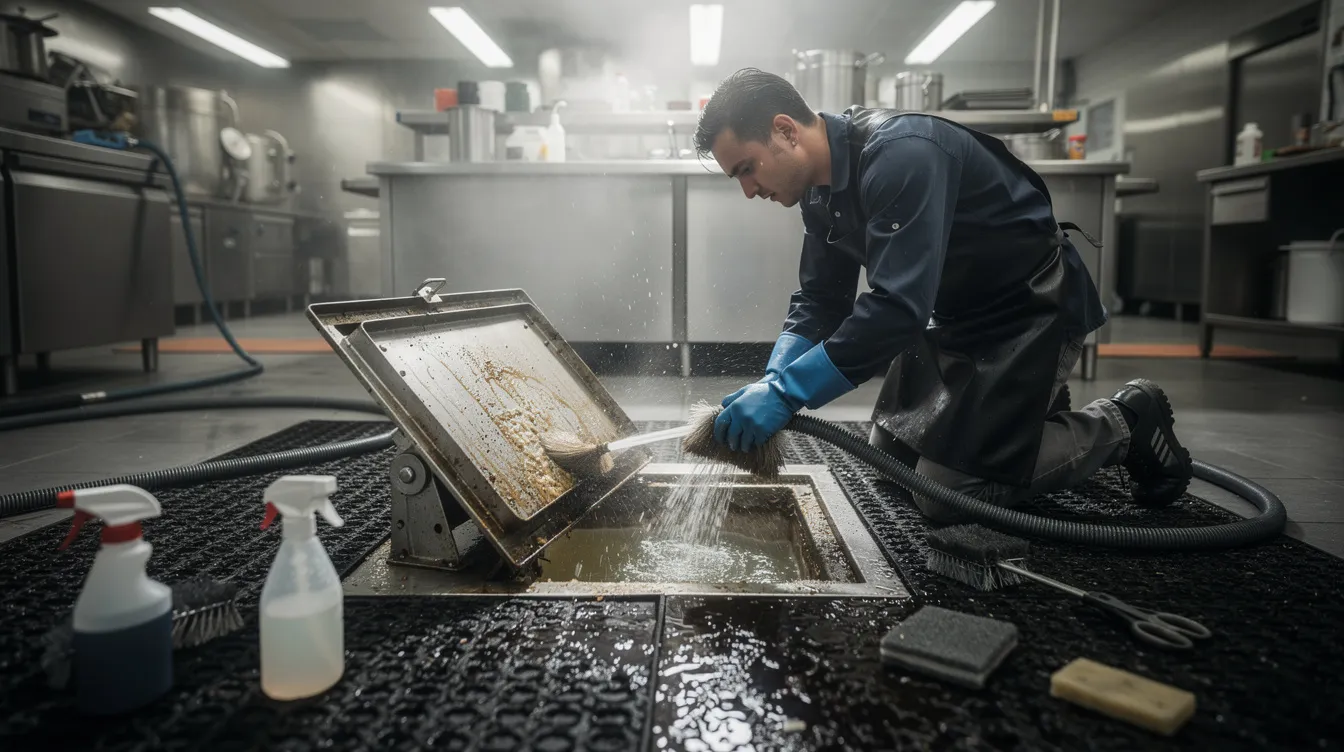
Grease traps are designed to intercept fats, oils, and grease before they reach municipal lines. For restaurants, that means cleaner plumbing, fewer backups, and better compliance with local wastewater rules. But when grease trap cleaning is postponed, the system can quickly become overwhelmed—turning a routine maintenance task into an urgent operational problem.
Here’s why grease trap cleaning can’t wait. 1) Slow buildup leads to sudden blockages
Grease doesn’t disappear; it accumulates. Over time, layers of FOG (fats, oils, grease) can thicken and solidify, reducing flow capacity and increasing the likelihood of clogs. What starts as “not that full” can escalate to a sudden blockage that disrupts kitchen operations. 2) Backups create costly downtime and sanitation risks
When a grease trap is overfilled or poorly maintained, wastewater may back up into plumbing fixtures or nearby drains. Beyond the inconvenience, backups can create sanitation concerns that affect food service areas, increase labor needs for cleanup, and potentially require professional remediation.
Even short interruptions can be expensive in a high-throughput kitchen—especially during peak service hours—when every minute matters. 3) Odors and pest attraction can affect customer experience
Neglected traps often produce strong odors that may waft from drains and venting systems. Those odors, combined with the organic material present, can also attract pests such as flies or rodents. For a restaurant, that can quickly become a public-facing issue and a reputational risk.
Proactive cleaning reduces both nuisance odors and environmental conditions that encourage infestations.
Local regulations commonly require restaurants to manage grease discharge to prevent environmental harm and infrastructure damage. In many jurisdictions, maintenance and servicing may be documented, especially for grease interceptors and larger systems. Skipping cleaning (or falling behind schedules) can increase the chance of inspections, violations, or fines.
Working with a qualified service provider—and keeping service records—helps restaurants demonstrate compliance and reduce uncertainty. 4) Regular service is usually cheaper than emergency repairs
Emergency responses can include rushed pumping, additional troubleshooting, plumbing repairs, and extended downtime. In contrast, routine grease trap cleaning is typically scheduled, more predictable, and easier to coordinate with operations.
Replacing or repairing damaged lines after repeated overflows can also be far more expensive than maintenance that prevents the problem from developing in the first place.
What to do next
To avoid delays, restaurants should align grease trap cleaning frequency with actual kitchen output (for example, how much fry-based cooking and high-grease food is produced). Many operators find it useful to establish a maintenance calendar, monitor performance signs—like slow drainage or recurring odors—and use documented service plans from licensed professionals.
Grease trap cleaning isn’t optional “extra work.” It’s infrastructure protection. The sooner a restaurant stays ahead of buildup, the less likely it is to face backups, compliance issues, and costly disruptions when the kitchen can’t afford them.
| |
|
| |
CALL ☎ Subscribe 👆
Next & Previous posts
Related materials:
CONTACT US 📩
Submit the form, we'll contact you as soon as possible!